
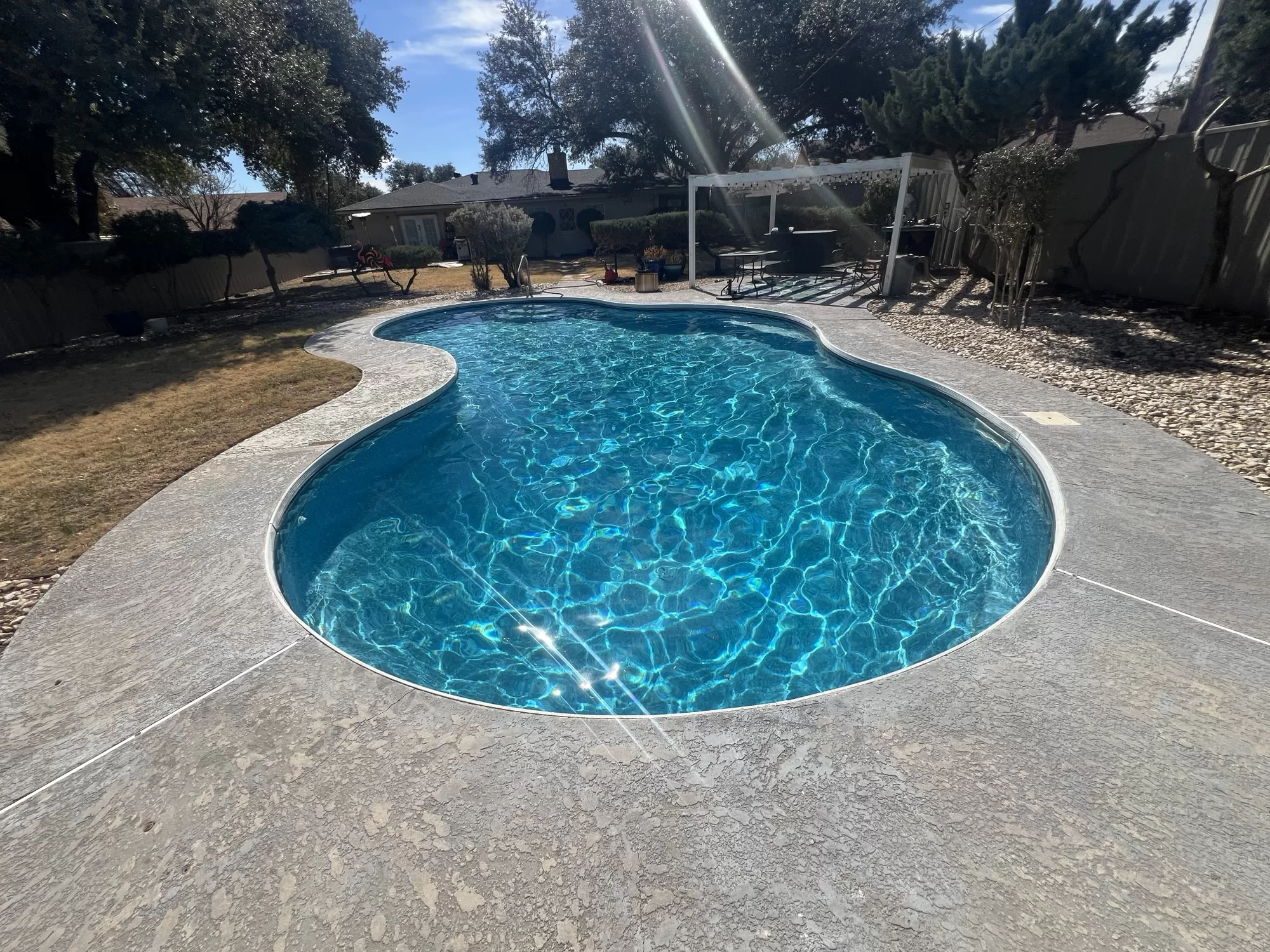
Check the cell before choosing a cleaner
A salt chlorine generator makes chlorine from dissolved salt in the water. Low chlorine or a warning light can have several causes, so an acid bath should not be the automatic first response. The cell may need inspection, the circulation may need attention, or the water and operating settings may need review.
Start with the exact manufacturer and model on the cell. A cleaning product advertised for salt systems still needs to be suitable for that equipment. Follow the cell manual and the cleaner label together; a generic online recipe cannot establish compatibility.
Concho Valley Pool’s San Angelo pool service is a starting point for discussing the pool, the equipment, and the right assessment.
Inspection is different from acid washing
Use the inspection schedule in your model’s manual. Seeing that an inspection is due does not mean clean plates need chemical treatment. Repeated unnecessary cleaning can add wear without addressing the reason chlorine is low.
Collect the information that changes the decision
- Model and age: Photograph accessible exterior labels and note the installation or replacement date if known.
- Warning message: Copy the exact words or light pattern. Include when it appears and whether it clears.
- Water readings: Record free chlorine, pH, the independently tested salt level, test method, and time. Keep the controller’s salt estimate separate.
- Operating conditions: Note pump schedule, chlorine-output setting, water temperature if measured, and recent changes.
- Previous work: List earlier cleanings, products used, water additions, and any recent repair.
The CDC’s home-pool testing guidance explains why regular chlorine and pH testing remains necessary. A controller display does not replace a test of the pool water. If readings are uncertain, resolve them before making repeated chemical adjustments.
Keep initial checks external
Do not loosen a cell union while the system is powered or pressurized. Removal requires the correct electrical isolation, prevention of automatic restart, pressure release, and plumbing procedure for the installation. If you cannot establish those conditions, leave the cell assembled and arrange qualified help.
Stop using affected equipment when there is damaged wiring, water in electrical equipment, overheating, or repeated breaker trips. Do not open a power enclosure or repeatedly reset a breaker to investigate.
Why there is no universal cleaning recipe
Manufacturers specify the method, equipment, and limits for their own cells. For example, Pentair’s IntelliChlor Plus/LT manual separates inspection and water cleaning from acid treatment for excessive scale. It warns against pressure washers and tools that can damage the blade coating, and against excessive acid washing.
Older equipment has its own instructions, including the legacy IntelliChlor IC15/20/40/60 manual. Identify the actual cell before applying a cleaning stand, solution, soaking time, or reassembly procedure from another model.
- Do not scrape coated plates with a metal tool or brush.
- Do not assume the whole cell or controller can be submerged.
- Do not make a solution stronger or extend a soak to speed the job.
- Never mix pool chemicals or improvise neutralization or disposal.
- Use the manufacturer’s full instructions, required protective equipment, and the product label. Arrange service if the handling or disposal requirements are unclear.
If scale keeps returning
Keep records of pH, alkalinity, calcium hardness, and previous deposits for the person assessing the pool. Repeated cleaning without looking at the water and operating conditions may leave the underlying problem unresolved. A low-chlorine reading after cleaning also needs a fresh assessment rather than another automatic acid wash.
Cleaning cannot repair cracked housings, damaged electrical parts, or an exhausted cell. Ask what evidence supports cleaning or replacement, and whether further testing is needed before ordering a part.
What to ask before approving service
Ask whether the estimate covers inspection, cleaning if appropriate, reassembly, leak checks, and a follow-up water or operating check. If replacement is proposed, request the exact compatible part number and a written explanation. Confirm labor, parts availability, and any warranty route before work starts.
Keep the equipment label photo, purchase record, and service notes together. Those details help distinguish the installed cell from a newer replacement family and make a future comparison more useful.
Get help with a salt-cell problem in San Angelo
Text 469-585-4093 with your location, cell model, warning message, recent readings, and exterior equipment photos. Include any leaks or electrical concerns without approaching unsafe equipment. Photos help plan the assessment but cannot prove that a cell needs replacement.
Contact Concho Valley Pool to discuss service scope and confirm availability. Have the model’s manual available so the plan can follow the equipment actually installed.
Tags: pool chemicals san angelo, pool service san angelo tx, salt cell cleaner, salt cell descaling, san angelo pool cleaning