
What is the Pentair Clean & Clear Plus?
The Pentair Clean & Clear Plus is a pool filter with four cartridge elements inside a pressurized tank. It captures debris as pool water passes through the cartridges. It is a filter assembly, not a replacement powder or chemical treatment. Pentair specifies cartridge cleaning rather than backwashing for this product.
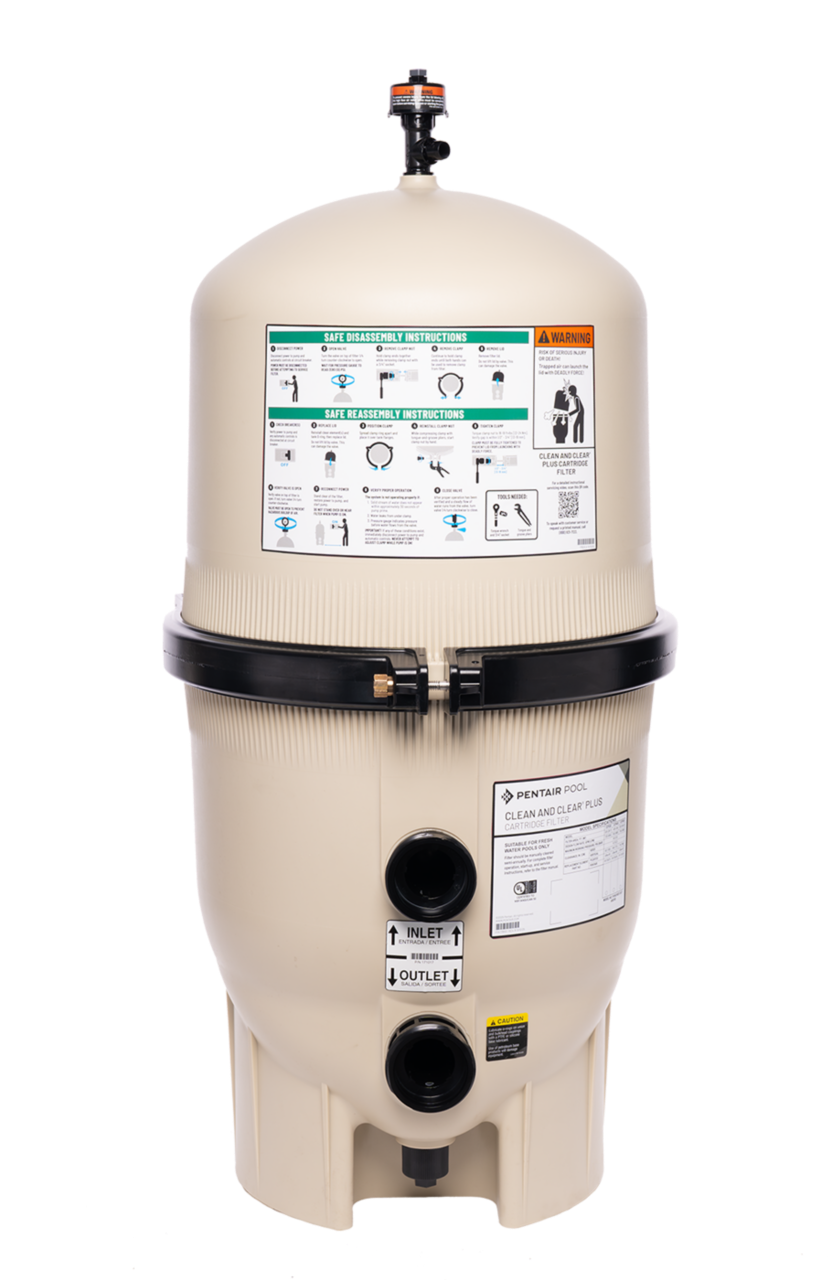
Start with the model label on your own tank. The family includes different filter sizes and hardware versions, so the name Clean & Clear Plus alone is not enough to order cartridges, choose clamp parts or follow a service procedure. Keep a photo of the label and the manual that matches the installed equipment.
Read pressure changes in context
Record the normal pressure after the filter has been correctly cleaned and the system returned to normal operation. Compare later readings under the same operating conditions. Pentair’s spring-clamp guide calls for cleaning at approximately 10 psi above the original starting pressure, or when flow falls significantly. With a variable-speed pump, compare pressure at the same pump speed.
- Higher pressure: Record how much it has risen and whether return flow has changed. A pressure change is a reason to investigate, not proof that the cartridges need replacing.
- Low or unstable pressure: Note visible air in the system, water level and any change in pump sound. Ask for diagnosis if the cause is unclear.
- Debris returning to the pool: Describe what you see and when it happens so a professional can check the filter and circulation system.
- Cloudy water: Bring recent water-test readings as well as pressure observations. Appearance alone cannot identify the cause.
Use Pentair’s product page and linked manuals to find the correct instructions. If the gauge appears damaged or unreliable, arrange service rather than using it to decide that the tank is safe to open.
Respect the pressure-vessel hazard
Do not loosen the clamp, lid or other tank hardware while the system is operating or pressurized. Trapped air can drive the lid off violently. Pentair advises consulting a pool professional before maintenance; use a qualified service provider if you have not been trained in the exact procedure.
Safe service requires the complete manufacturer sequence for shutting off power and preventing automatic restart, releasing pressure, opening, inspection, correct reassembly and startup. This article does not replace that sequence. Cast-clamp and spring-clamp versions have different instructions, so do not copy a clamp procedure from a similar-looking tank.
Do not close off the pump’s suction supply or experiment with skimmer and drain isolation while running it. A pump needs an unobstructed, correctly configured water supply. If it loses prime or appears to run dry, stop it using the normal controls if safe and have the cause checked. Pentair’s pump safety guidance warns that dry operation can damage the pump.
Cleaning and replacement are separate decisions
Once the cartridges have been safely removed under the correct procedure, Pentair describes cleaning them with a garden hose. Do not substitute a pressure-washer routine or add sand or diatomaceous earth to this cartridge filter. Follow the matching manual for cleaning products and handling.
Ask the technician to inspect cartridge fabric and end caps, seals, the manifold and tank hardware, and to check performance after reassembly. There is no single replacement age that applies to every pool. Persistently poor flow after cleaning deserves diagnosis before buying a new set of cartridges or a replacement tank.
Prepare for a San Angelo service call
Send the tank model, a photo of the external label and clamp style, the current pressure, the last known clean pressure and any recent pump-speed changes. Note leaks, returning debris and the last cleaning date. Stay back from questionable equipment rather than moving closer for a photograph.
Contact Concho Valley Pool at 469-585-4093 to ask whether it can inspect your filter model and provide an estimate. Confirm the proposed work and exact replacement parts before authorizing a repair. The links below cover service inquiries and pool supplies.
- Concho Valley Pool
- Contact Concho Valley Pool
- Pool chemicals and chlorine
- San Angelo pool cleaning services