
Which Polaris cleaner fits your pool?
There is no single best Polaris cleaner for every San Angelo pool. Existing plumbing, pool dimensions, surface, debris and the effort required to empty or lift the cleaner all affect the choice. Start with those facts, then compare specific models.
If you are replacing a working pressure-side setup, compatibility may matter more than extra features. If you want a robot, check its coverage and electrical requirements before treating it as a drop-in replacement.
Pressure-side models: check the booster requirement
The Polaris Vac-Sweep 280 uses a required booster pump and collects debris in a bag. The Polaris Vac-Sweep 360 operates from the filtration system without a booster; Polaris says it must not be used with one. These are different installations, so do not connect a new model simply because the hose appears to fit.
Ask an installer to confirm the dedicated line, available flow and the condition of any existing booster pump. Include necessary plumbing, electrical work and replacement hoses in the comparison rather than looking only at the cleaner price.
Robotic models: check coverage and handling
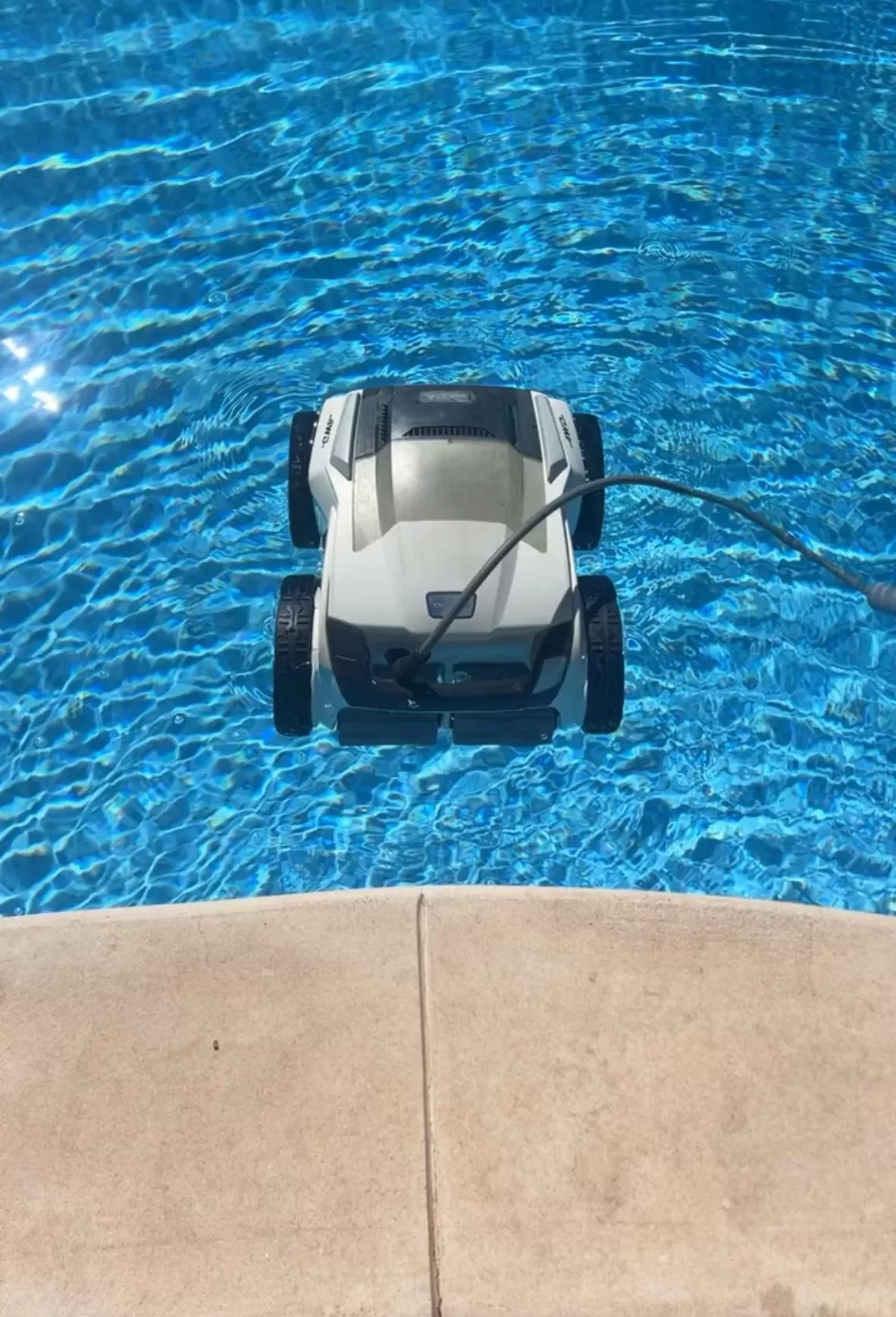
The Polaris VRX iQ+ is a corded robotic cleaner with its own debris canister. A robot’s separate debris collection can be useful, but the pool still needs working filtration and circulation. Buying a robot will not correct a pump that loses prime or a circulation fault.
- Match the stated pool-size range and usable cable reach to the actual layout.
- Check whether the model cleans the floor, walls and waterline, and which cleaning modes it offers.
- Confirm filter options for fine dust as well as room for leaves.
- Consider the weight when wet, removal method, storage space and how easy the filter is to rinse.
Electrical safety comes before convenience
Follow the Polaris robotic-cleaner manual for the specific unit. Use the required GFCI-protected outlet, keep the control box out of the water and do not use an extension cord. Unplug before cleaning or maintenance. Stop using a unit with a damaged cable or recurring protective-device trips, and have it assessed.
Compare cost without assuming savings
Get the complete price, including required accessories or installation. Ask about wear parts, replacement filters, the repair process and written warranty terms for the exact model and seller. Energy use depends on equipment and runtime; it should not be promised as a fixed saving for every pool.
For apartments, hotels or other shared pools, confirm that the model is rated for the intended use and that its warranty covers that use. A large residential cleaner is not automatically a commercial model.
If your current Polaris is underperforming
With power or pump operation safely off, check its bag or canister and accessible debris paths. Use the model’s instructions for hose setup, flow and wear parts. Record what happens during a cycle before replacing components. Repeated faults, leaking housings and internal electrical work need a qualified assessment.
Getting help in San Angelo
For help with comparing Polaris cleaners or assessing the one you own, explore San Angelo pool cleaning services and contact Concho Valley Pool to ask about service options and availability. Share the model number, pool dimensions and photos of the equipment connections. Ask about current options, diagnosis and written pricing before committing.
Tags: polaris pool cleaner, polaris vrx iq, pool cleaner review, pool maintenance san angelo, pool robot san angelo, robotic pool cleaner