
Choose robotic cleaner features around your pool
The most useful robotic pool cleaner is one that fits the work you need it to do. A large leaf basket may matter more than phone control in one San Angelo yard; filter access and easy lifting may matter more in another.
Use the checklist below to build a shortlist from manufacturer specifications, then compare the features you will use most.
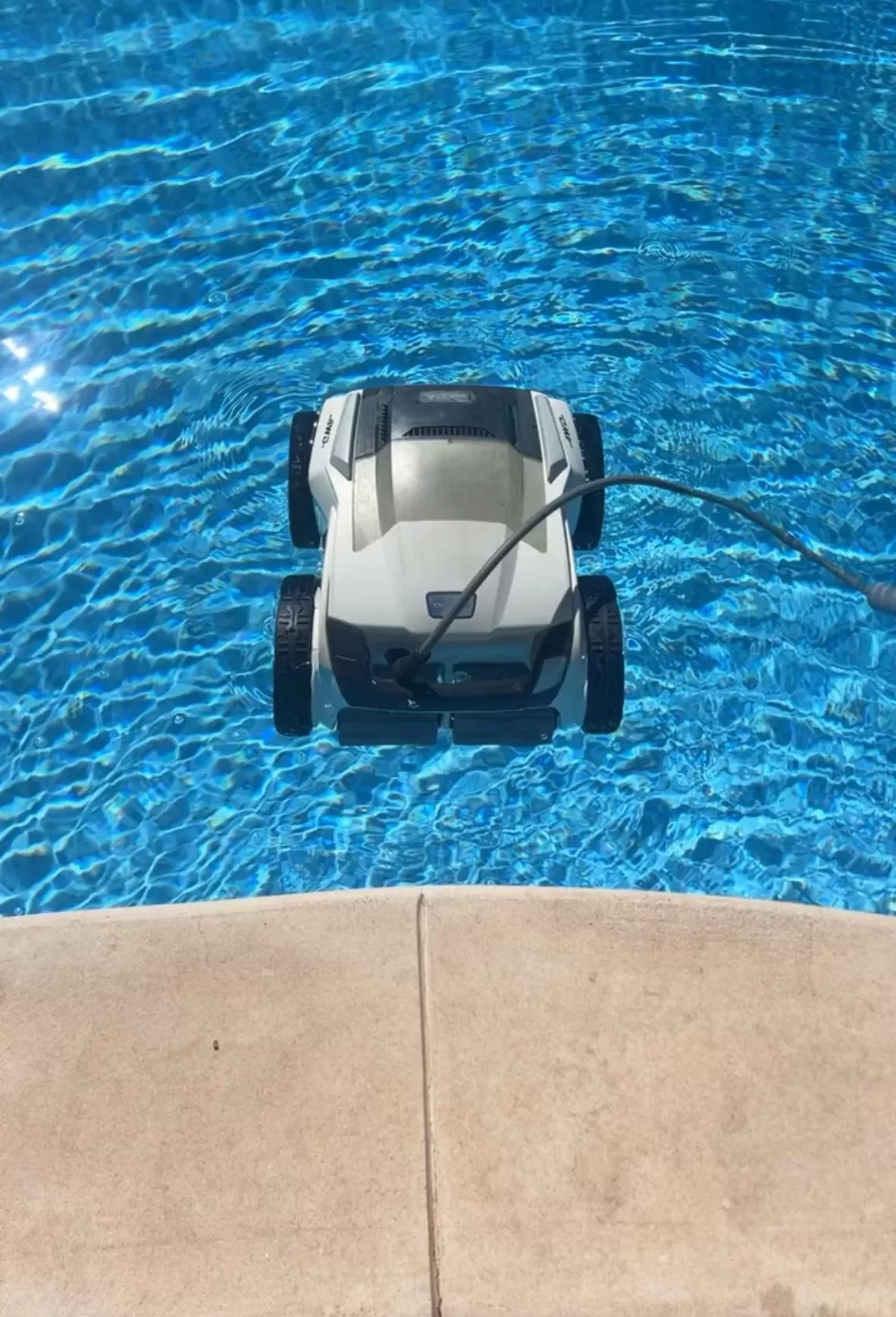
Write down the job before choosing features
- Pool dimensions: Measure the length and width and note depth changes, steps, benches, ledges and a separate spa.
- Surface: Record whether it is plaster, pebble, fiberglass, tile or a liner. Verify the exact cleaner and brush combination for that finish.
- Debris: Distinguish large leaves and grass from settled fine dirt. Note where debris accumulates and how often you can empty a filter.
- Handling: Consider who will retrieve the cleaner, the lift over the pool edge and the distance to storage.
Choose cleaning coverage explicitly
Floor cleaning, wall climbing and waterline scrubbing are separate specifications. A model described as climbing walls does not automatically promise waterline, stair or tanning-ledge cleaning. Ask the seller to point to the relevant manufacturer specification rather than relying on a photograph or the word “smart.”
Compare maximum pool dimensions as well as the usable cable layout or cordless operating limits. A longer cycle by itself does not prove a cleaner will reach a larger pool or negotiate its obstacles.
Match filtration to the debris
Look for a filter that is straightforward to remove and rinse. Check which filter panels are included and whether a finer option is compatible or sold separately. A large basket and a fine filter solve different problems: one holds more debris, while the other targets smaller particles.
For a heavily leaf-covered pool, remove bulky material manually first. Avoid choosing solely by a suction claim or basket size without checking the actual inlet, filter options and cleaning procedure. Maytronics notes that small particles can obstruct filters even when they look clean.
Decide how you want to power and manage it
Corded models need a safe power-supply position and a cable route that reaches the pool without an extension cord. Cordless models need a charging and retrieval routine. Compare the stated cycle duration, charging instructions and storage requirements for each candidate.
App control, scheduling and navigation features vary by model. Polaris describes these as features of selected models, so confirm what the exact version offers and which functions depend on connectivity. Prioritize a useful cleaning mode over an app feature you are unlikely to use.
Check ownership details before buying
Ask about replacement filters and brushes, warranty terms, return restrictions after pool use and the repair route. Confirm any promised local support with the provider directly. For shared or commercial pools, verify that the cleaner is intended for that application.
Keep the circulation, filtration and water-testing routine in place. Debris pickup does not establish that the water is safe to swim in; CDC’s home-pool guidance calls for regular disinfectant and pH testing.
Put the shortlist into a pool-care plan
For help considering the wider maintenance needs, review San Angelo pool cleaning services and contact Concho Valley Pool with your pool dimensions, surface, debris concerns and shortlisted models.
Tags: polaris vrx, pool robots, pool service san angelo tx, robotic pool cleaner, robotic pool cleaner maintenance, san angelo pool cleaning