
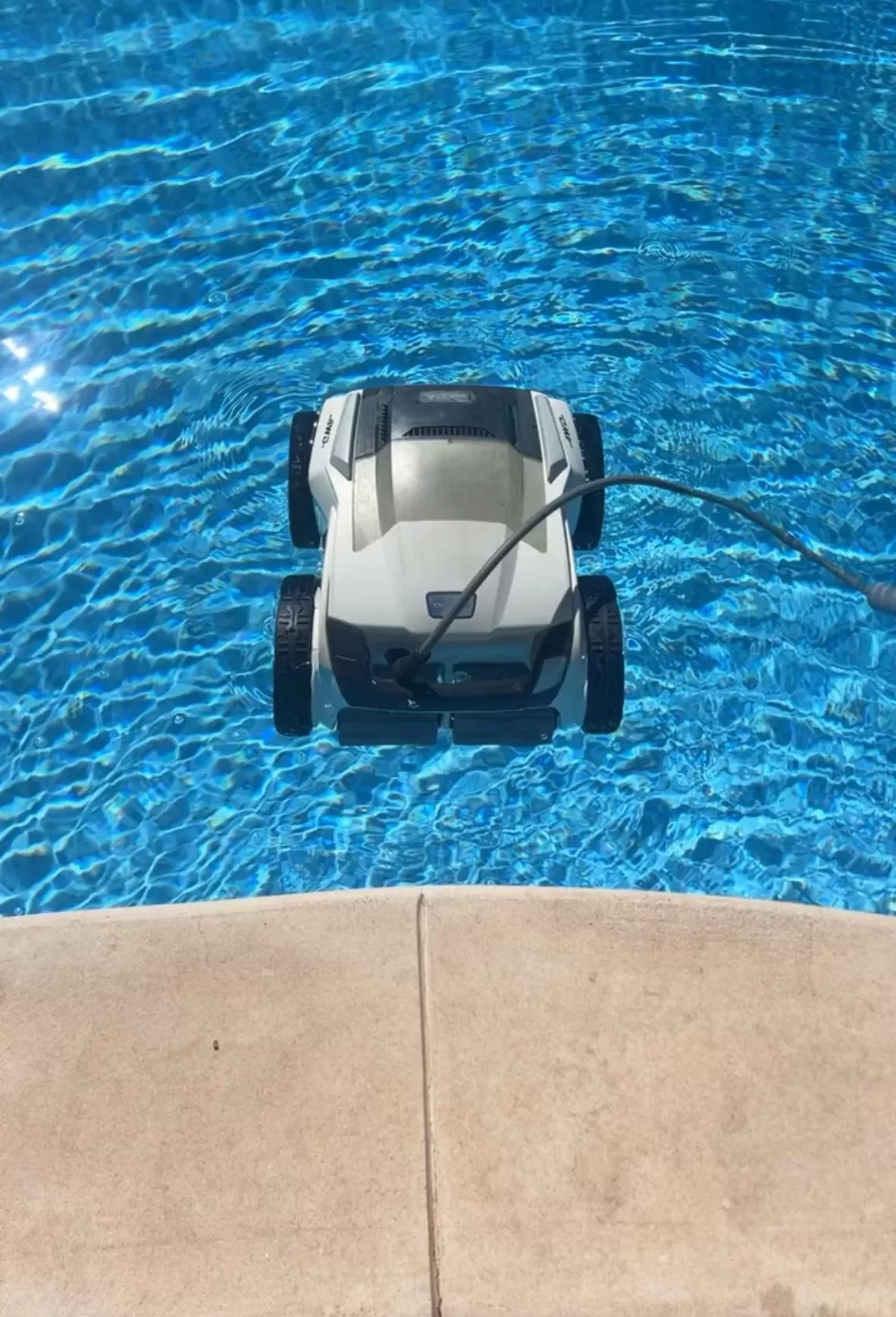
Choose a pool robot using evidence you can check
A useful robotic pool cleaner is one that fits your pool and removes your recurring debris without creating an awkward maintenance job. Start with those needs before comparing apps, cycle names or advertised suction figures. This guide provides an independent selection checklist based on published information, rather than hands-on test scores.
The historical URL retains the words “Consumer Reports.” This article is not affiliated with that organization and does not reproduce its ratings or imply an endorsement.
If you also need help with ongoing care, see Concho Valley Pool’s San Angelo pool cleaning services. A robot handles part of the physical cleaning; sanitizer testing and circulation still need their own care plan.
Define the job in one sentence
For example: “I need to collect fine debris from a sloped vinyl floor, and I can brush the steps myself.” Another owner may prioritize leaves, easy lifting or waterline cleaning. Write your main need and maximum total budget before making a shortlist.
Use compatibility as the first filter
Download the manual for each exact model, including its regional version and any suffix in the name. Product families can contain models with different filters, coverage or controls. Eliminate options that do not explicitly support your pool’s construction, surface and dimensions.
- Pool size: Check the stated maximum dimensions and whether the cable or battery-based operation suits the complete pool.
- Floor and obstacles: Note slopes, drains, ladders, benches and shallow shelves. Ask about those features individually.
- Surface condition: Read liner and finish precautions. Repair loose or damaged material before relying on an automatic cleaner.
- Coverage: Separate floor, cove, wall and waterline claims. “Pool cleaning” does not establish that every surface is covered.
For example, Maytronics lists floor-and-cove coverage for the Dolphin E10. That is a useful specification for the right above-ground pool, but it would not satisfy a buyer whose requirement is full wall cleaning. The example illustrates how to read a listing; it is not a ranked recommendation.
Where documentation is silent, ask the manufacturer or seller for clarification. A promotional photograph showing a cleaner beside a pool does not establish compatibility.
Compare filters, handling and power before extras
Debris collection
Identify the filter supplied in the box, any optional fine-debris insert and replacement part numbers. Ask how easily the basket or bag opens and rinses. Leaves, fine sediment and stringy plant debris can present different handling problems. A filter that suits one job may need more frequent cleaning during another.
Do not treat an isolated flow-rate or motor-power figure as a cleaning score. Unless models were measured under the same disclosed conditions, those figures do not establish which one will cover your pool or collect its debris better.
Retrieval and storage
Check the machine’s stated weight and retrieval method, then consider your pool-edge height and storage route. Water retained in the cleaner makes lifting less convenient until it drains. If possible, handle a display unit and practice opening the filter. Check whether a caddy is included, optional or unnecessary for your setup.
Corded or cordless
A corded model needs a suitable outlet and a manageable cable route. A cordless model needs a charging location, adequate cleaning time and a practical retrieval method when its cycle ends. Ask about battery replacement availability and cost rather than assuming the battery is owner-replaceable.
Read the electrical instructions before purchase. Maytronics specifies GFCI protection and prohibits extension cords for Dolphin cleaners. The Polaris robotic-cleaner manual likewise gives model-specific electrical and swimming restrictions. Use the supplied power equipment as instructed, keep swimmers out during operation and avoid damaged cords or chargers.
Compare the complete purchase and verify early performance
For each finalist, write down the purchase price, required accessories, delivery, replacement filters and ordinary wear parts. Include any cost of providing a suitable outlet. There is no useful universal payback estimate without knowing your current cleaning time, electricity costs and the actual model.
Check the seller’s return conditions before placing an order, especially whether a used cleaner can be returned. Read the manufacturer’s written warranty for the intended residential or commercial use, exclusions, service location and shipping responsibilities. A local seller’s willingness to discuss a repair is different from confirmation of coverage for your serial number.
A simple comparison sheet
- Mark every essential requirement as confirmed, unsupported or unsuitable.
- List the manual page or manufacturer answer supporting each confirmation.
- Compare total cost only among models that meet the essentials.
- Give convenience features, such as app controls, weight according to how you would actually use them.
After purchase, use the approved setup and observe several ordinary cycles within the return period. Note persistent missed areas, filter-cleaning time, retrieval effort and tangles or stalls. Keep photographs and dates when seeking support. Avoid changing several settings at once, which makes the result harder to interpret.
For local product questions, review Concho Valley Pool’s pool-robot information. Continue routine testing and refer to its pool chemicals information for supply questions.
Contact Concho Valley Pool or call or text 469-585-4093 with your pool dimensions, surface, main debris problem and shortlist. Confirm model-specific support and availability directly.
Tags: polaris vrx iq, pool cleaning service near me, pool service san angelo tx, robotic pool cleaner, san angelo pool cleaning