
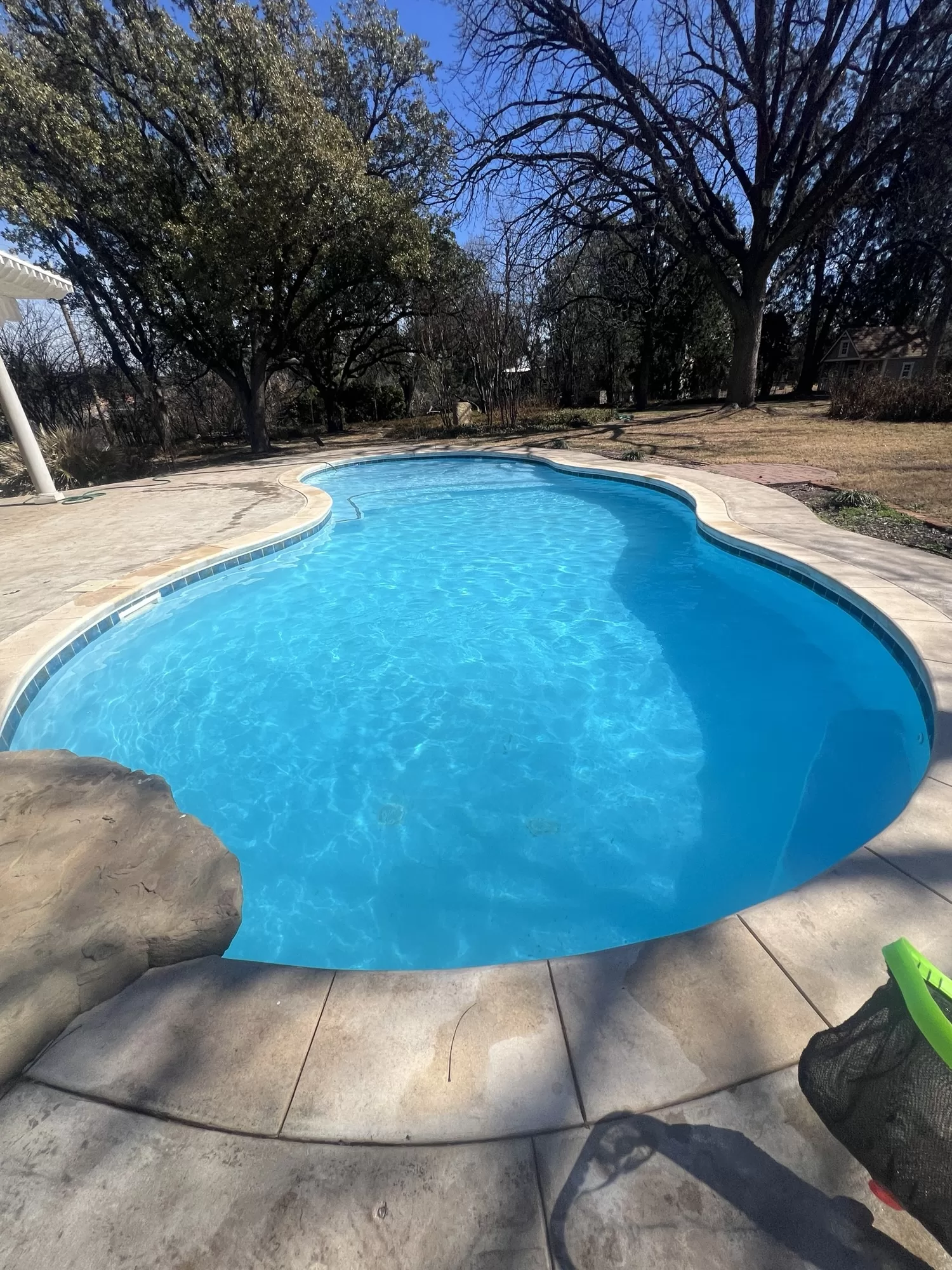
Start with testing when your pool turns green
Green pool water can point to algae, dissolved metals, or more than one problem. Color is a clue, not a diagnosis. For a San Angelo homeowner, the most useful first step is to keep swimmers out while you establish the water’s condition and gather the details needed for a treatment plan.
Concho Valley Pool’s San Angelo pool cleaning services page is a starting point for asking about an assessment. Photos help describe the change, but water testing and a look at circulation and filtration are needed before recommending products or a recovery schedule.
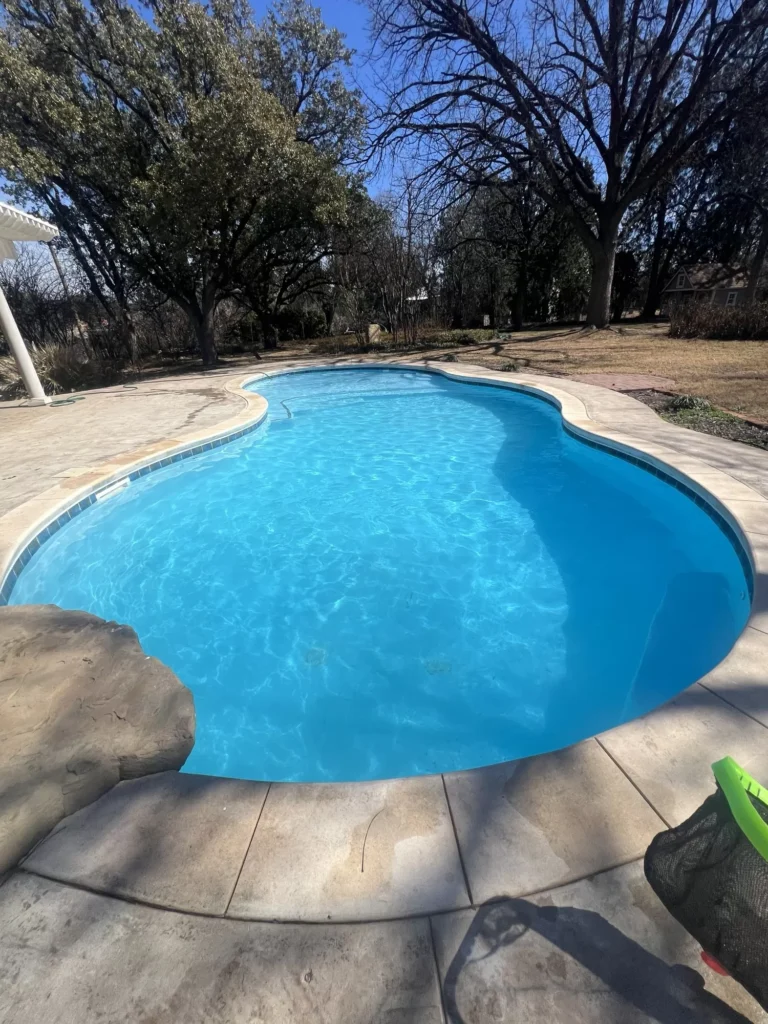
Pause swimming while the cause is unclear
Do not swim when the bottom is not clearly visible, circulation is not working, or disinfectant and pH have not been verified. Keep the pool secured while it is being assessed and treated. A change from green to blue does not establish that swimming can resume.
The CDC’s home-pool guidance recommends checking disinfectant and pH at least twice daily, and more often during heavy use. Follow the directions for your sanitizer and testing equipment; a scheduled service visit does not replace checks between visits.
What algae and metal discoloration can look like
Algae is one possible explanation for green, cloudy water, especially when sanitizer has been inadequate or circulation has been interrupted. Visible growth on surfaces can add context, but a photograph alone cannot tell you the complete water chemistry.
Dissolved metals can also change the color. Copper can produce a blue-green tint, and iron can cause greenish or brown discoloration. Mention recent fill water, metal-containing products, and any color change following treatment. These details help decide whether metal testing belongs in the assessment.
Do not use “clear green means metals” or “cloudy green means algae” as a treatment rule. Appearance overlaps, and multiple issues can occur together. Unnecessary product additions can leave more variables to sort out.
Gather a useful set of readings
Start with free chlorine or the disinfectant used by your system and pH. Ask whether the assessment should also include combined chlorine, total alkalinity, cyanuric acid, calcium hardness, and, when indicated, iron or copper. The appropriate tests depend on the pool, treatment history, and symptoms.
Share actual readings with the date and testing method, rather than saying everything is “in range.” Follow the test-kit instructions, use in-date reagents, and report any result outside the kit’s measurement range. If you cannot obtain dependable readings, ask for professional testing before adding a corrective dose.
Provide the estimated pool volume and identify the surface, filter type, and sanitizer system if known. These details matter when selecting a compatible treatment and determining the amount to use.
Check the cleanup plan, not just the chemical list
A recovery plan should address the reason the water changed, removal of debris or growth, and how the filter will handle the cleanup. Ask what needs to happen first, who will carry out each step, and when the water will be retested.
- Circulation: if equipment is not operating normally, arrange an assessment rather than assuming longer runtime will solve the problem.
- Debris: describe leaves, dirt, or material on the floor so the cleaning method can be planned.
- Filtration: identify the filter type and last known service date. Cleaning procedures and service needs differ by model.
- Treatment: use products only as their labels direct and only when compatible with the diagnosed problem and pool system.
- Follow-up: agree on what readings and observations will show progress and whether another visit is needed.
Do not open a pressurized filter or improvise equipment repairs. A filter housing can hold dangerous pressure; use a qualified professional for service you are not trained to perform.
Avoid stacking treatments
Adding shock, algaecide, clarifier, and flocculant in quick succession makes it harder to know what is helping. Never mix pool chemicals together. Keep them in their labeled containers, follow safety instructions, and tell the technician about everything already added.
There is no single shock dose or pump schedule that fits every green pool. Product strength, pool volume, chemistry, equipment condition, and the cause of discoloration all affect the plan. Likewise, a robotic cleaner may remove debris but does not establish proper disinfection or correct a circulation fault.
Know what counts as recovery
Ask for more than a promised finish date. The handoff should explain whether the water is clear enough to see the bottom, equipment is functioning, readings meet the relevant operating targets, and all product-specific swimming restrictions have been met. Shared-use pools also need their responsible operator to follow applicable reopening requirements.
After recovery, keep a simple log of tests, additions, filter service, and unusual changes. Check more closely after heavy use or a disruption to routine care. If green water keeps returning, review the underlying cause instead of repeating the same treatment indefinitely.
Ask about a green-pool assessment in San Angelo
Contact Concho Valley Pool or call or text 469-585-4093 with a pool photo, recent readings, and a list of treatments already used. Ask what the assessment includes, how cleanup and follow-up are priced, and what current scheduling allows.
Tags: algae green pool, green pool cleanup, pool chemicals san angelo, pool cleaning service near me, pool service san angelo tx, san angelo pool cleaning