
Pool maintenance in San Angelo: build a routine that catches changes
Reliable maintenance combines physical cleaning, water testing and attention to equipment. Whether you do the work yourself or hire help, the goal is a repeatable routine with clear responsibilities. Keep a record of normal readings so a small change is easier to spot before it becomes a larger problem.
Check the pool between service visits
Look for leaves, a falling water level, new surface marks and a change in return flow. Check that gates close and latch, and keep the deck clear. Before swimming, make sure you can clearly see the deepest bottom and that drain covers appear secure and undamaged.
Do not judge sanitation by clarity or smell. Test according to CDC’s home-pool testing guidance and your treatment plan. Keep readings and chemical additions together so you can see whether a problem is recurring.
Use cleaning time well
Skim accumulated debris, brush surfaces with tools approved for the finish, and vacuum areas the automatic cleaner misses. Check steps, corners and shelves deliberately. Empty cleaner baskets or filters according to their manuals; a cleaner that moves around the pool may still need attention to collect debris effectively.
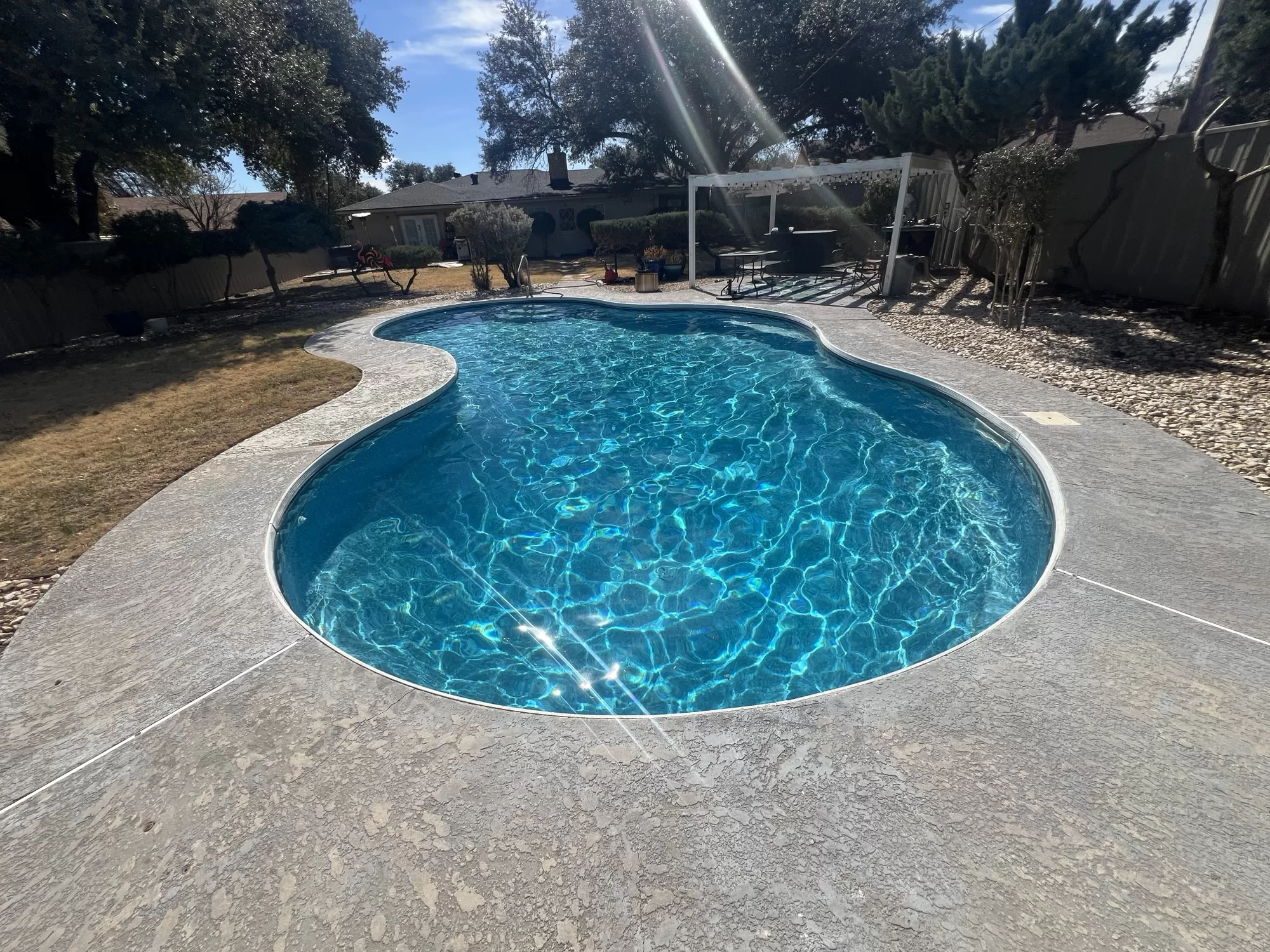
Make filter checks meaningful
Record the pressure after a properly completed filter cleaning. Compare later readings at the same pump speed and valve configuration, since changing the operating conditions changes the reading. Follow the model’s instructions for the cleaning threshold and method.
For example, Pentair gives a rise above starting pressure for its Clean & Clear filters, rather than one absolute pressure for every installation. That example does not replace your filter’s own manual.
Never loosen a filter clamp or lid while the system is pressurized. Pump shutdown, pressure relief, reassembly and restart all require the correct procedure; use a professional if you have not been trained on the equipment.
Respond to symptoms rather than adding products at random
- Cloudy water: check test results, debris and circulation together. Keep swimmers out when the deepest bottom is obscured; do not wait for a promised clearing time.
- Weak flow or bubbles: observe water level, visible debris and equipment behavior. Several faults can look similar, so avoid assuming every low-flow problem is a dirty filter.
- Recurring algae: review sanitizer history, brushing coverage and circulation with a pool professional. Repeated, guessed “shock” doses can leave the underlying issue unresolved.
- Unusual noise or a leak: document when it happens and obtain an equipment diagnosis. Leave electrical and gas work to qualified specialists.
Adjust after storms and heavy use
Once conditions are safe, remove storm debris and recheck the pool rather than waiting for the next scheduled visit. After heavy swimming, review test results and follow the labeled treatment directions. Never combine chemicals, and reopen the pool only when the treatment label and water readings permit it.
If you use a service, agree who checks water between visits and how additional work is approved. Ask for each visit’s readings, completed tasks and observations so the next decision is based on a record.
Pool care help in San Angelo
For help with your pool, explore San Angelo pool cleaning services or contact Concho Valley Pool at 469-585-4093. Share your pool’s condition and equipment details, and ask which services are available for your address.
Tags: pool chemicals san angelo, pool cleaning service near me, pool filter cleaning, pool maintenance, pool service san angelo tx, san angelo pool cleaning