
Choosing a pool scrubber for your San Angelo pool
A pool scrubber can help remove a film from steps or the waterline, but the right tool depends on the surface and the deposit. Before buying a stronger brush or powered attachment, identify whether you are dealing with loose dirt, an oily film, algae, mineral buildup or a damaged finish.
Brush, scrubber or cleaner?
- Pool brush: covers walls, floors and steps as part of routine care.
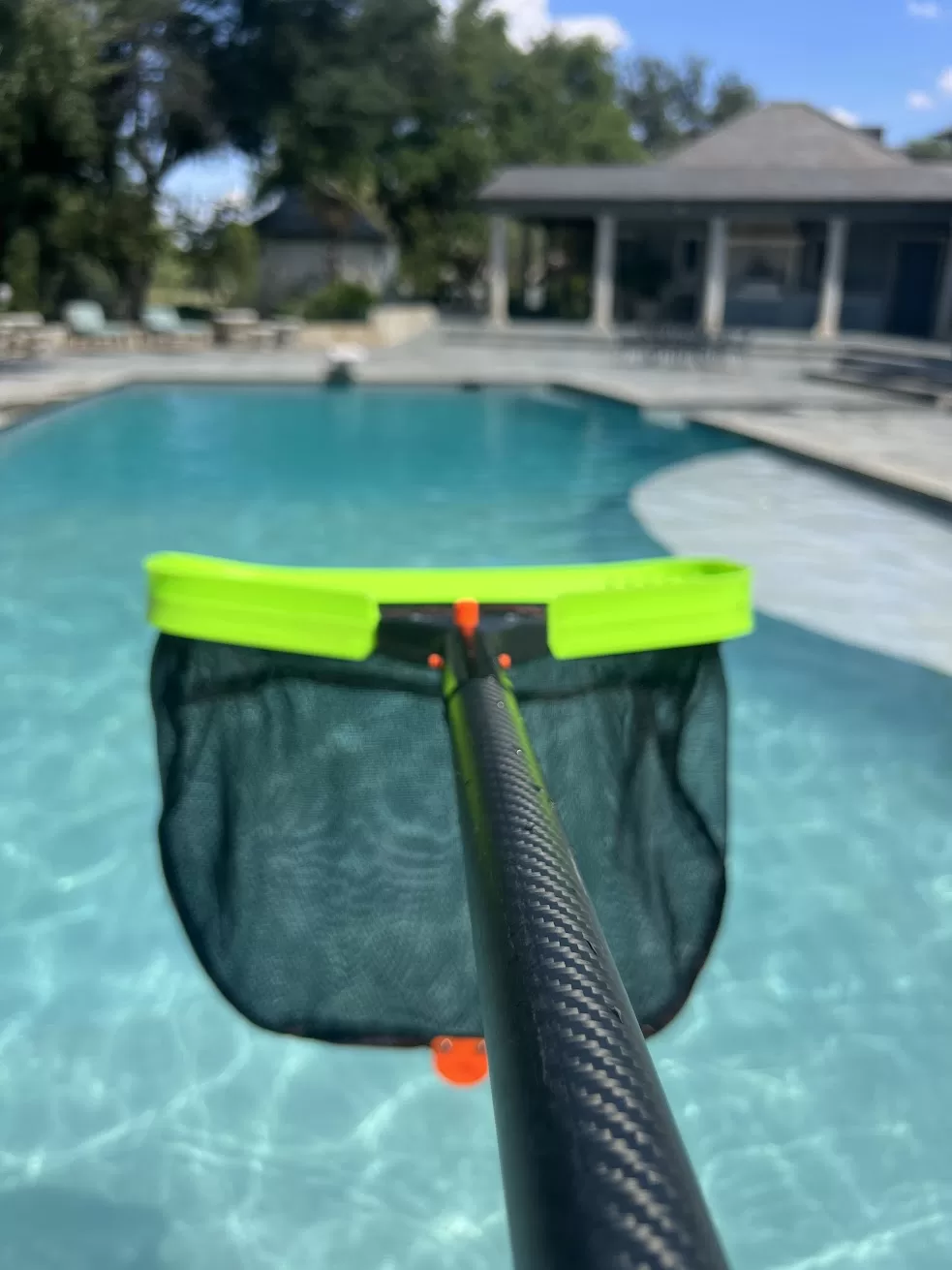
- Hand or pole-mounted scrubber: gives more control over a small waterline section or awkward corner.
- Powered scrubber: adds agitation; check the exact product’s approved surfaces and water-use limits.
- Vacuum or robotic cleaner: collects debris. Some models also brush, but coverage varies and shelves or corners may still need attention.
Choose for reach and control as well as cleaning strength. A comfortable pole and a securely attached head make it easier to work from the deck without leaning over the water.
Match the tool to the finish
Identify tile, vinyl, fiberglass, plaster or pebble before selecting bristles or pads. A brush suitable for one surface may damage another. Check both the pool-finish guidance and the tool label rather than treating an “all-purpose” claim as approval for every pool.
For tile, NPT recommends nylon cleaning tools and warns against pumice stones and abrasive or acidic cleaners. Start gently and test an inconspicuous spot. Stop if the surface scratches, loses gloss, flakes or releases grout.
A controlled cleaning sequence
- Inspect the area in good light. Photograph recurring marks so you can compare changes.
- Remove loose debris first and use an approved brush or pad with light pressure.
- If a cleaner is needed, verify that it is labeled for the installed pool surface and follow its handling and rinsing directions.
- Collect loosened debris with the appropriate vacuum or cleaner, and check its filter or basket afterward.
- Retest the water when required by the cleaning product and keep swimmers out for its specified treatment interval.
Do not use an ordinary household electric scrubber in a pool. “Cordless” does not mean submersible; the manufacturer’s water-use rating must cover the intended use. Keep chargers and unsuitable electrical tools away from the water.
When scrubbing is not solving the problem
Brushing alone does not correct inadequate sanitizer or an underlying water-balance problem. If film returns quickly, document your test results and ask for a diagnosis before increasing abrasion or adding more products. Scrubbing harder can hide the distinction between a removable deposit and permanent surface damage.
Leave heavy scale removal, acid treatment and media-blasting to a qualified specialist who can confirm material compatibility. A photograph may help describe the area, but it cannot establish water chemistry or prove a stain’s cause.
Pool care help in San Angelo
For help with your pool, explore San Angelo pool cleaning services or contact Concho Valley Pool at 469-585-4093. Share your pool’s condition and equipment details, and ask which services are available for your address.
Tags: chlorine prices san angelo, pool cleaning service near me, pool service san angelo tx, pool vacuuming, san angelo pool cleaning