
Pool surface cleaner choices for San Angelo homeowners
For leaves, pollen and insects floating on your pool, look for equipment designed to skim the water’s surface. Floor and wall cleaners serve a different job. Identifying where the debris collects is the most useful first step before buying another cleaner.
Start with the debris you can see
If leaves are still floating, a skimmer or net can collect them before they settle. If dirt is already on the floor, choose a vacuum or floor-cleaning system suited to that task. A film at the waterline may need brushing and an appropriate surface-cleaning method. Persistent cloudiness or suspected algae calls for water testing and a broader maintenance check.
Quick checklist: before you buy
- Cleaning area: confirm that the product collects floating debris; “waterline cleaning” alone does not mean surface skimming.
- Debris: check basket mesh and capacity for the leaves, insects or fine material you want to collect.
- Pool layout: consider steps, shallow shelves, corners and other equipment that may obstruct a floating unit.
- Power: solar and rechargeable models have different charging and storage requirements.
- Compatibility: review the exact model’s salt-level, water-temperature and pool-size limits.
Types of surface-cleaning tools
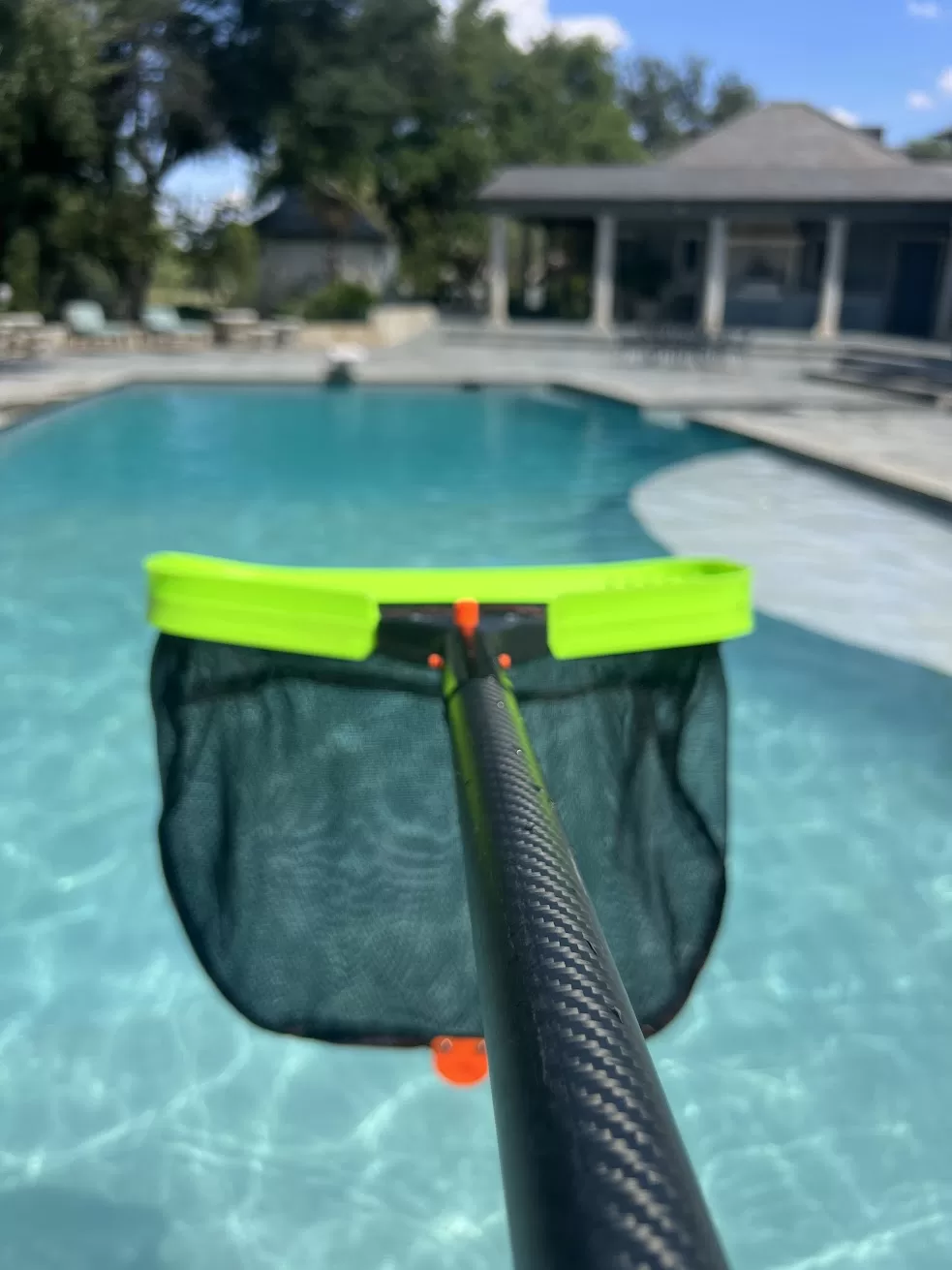
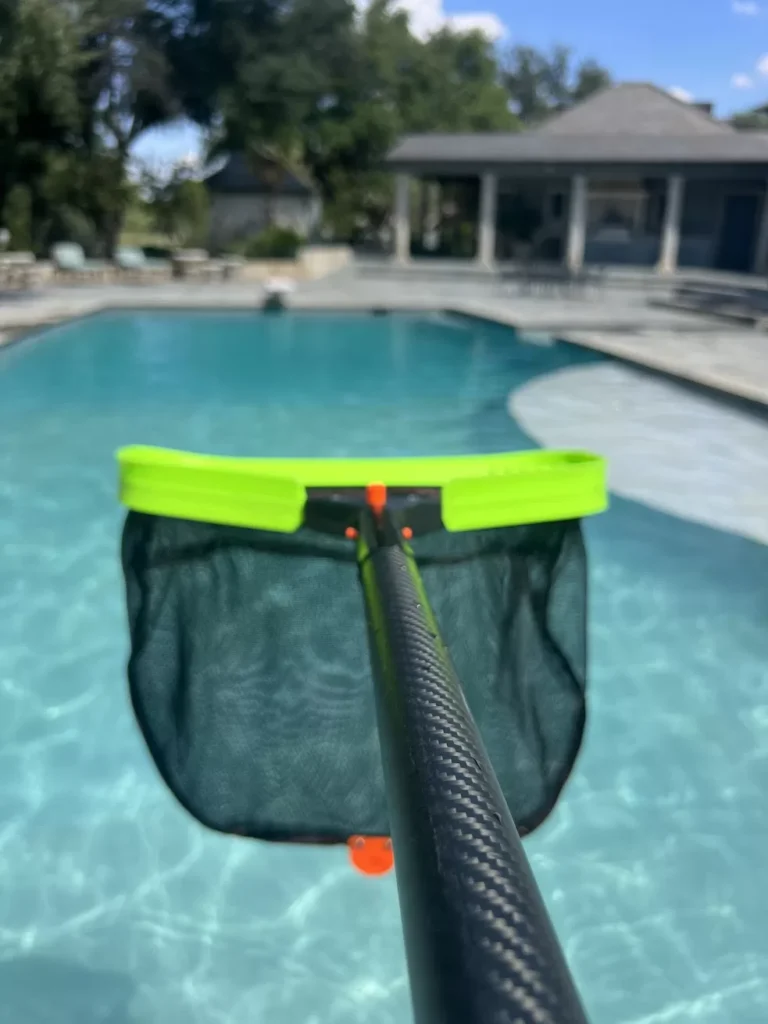
- Manual skimmer net: useful for a quick pass around the pool and targeted leaf pickup.
- Built-in pool skimmer: keep its basket clear and check water level and circulation if floating debris is collecting nearby.
- Floating robotic skimmer: collects surface debris into its own basket. For example, the Betta SE manual describes a solar-powered surface skimmer; check its instructions for operating limits and remove it before swimming.
- Floor and wall cleaners: suction-side, pressure-side and many electric robotic models focus on submerged surfaces. Verify a specific surface-skimming feature before expecting one to collect floating leaves.
Practical tips for testing a surface cleaner
- Compare the same areas before and after a cleaning session: open water, corners and around steps.
- Check the basket often while learning your debris load; empty it before buildup obstructs pickup.
- Watch for interference from hoses, floats and other cleaners, and follow the manufacturer’s guidance for using them together.
- Keep up with brushing, water testing and filtration even when surface pickup looks good.
When to get help
Repeated clogs, poor circulation or debris that quickly returns can point to a problem beyond the surface cleaner. Note where the material accumulates and whether it floats or settles before changing equipment.
Need help in San Angelo?
Review Concho Valley Pool’s San Angelo services to see the available types of care. For help matching a cleaning method to your pool, contact Concho Valley Pool with a photo and a description of the debris you are dealing with.
Tags: pool cleaning service near me, pool service san angelo tx, pool surface cleaner, pool vacuuming, robotic pool cleaner, san angelo pool cleaning