
Choosing a cleaner for your inground pool
The most useful cleaner is the one that fits your pool and the debris you actually remove. A pool under trees may need generous leaf capacity; a pool that collects fine dust may need a finer filter. Steps, benches, tight corners and the distance from the connection point also affect coverage.
Before comparing brands, write down pool dimensions, surface type, pump and filter models, available connections and the work you still expect to do by hand. That turns a broad search for inground pool cleaners into a practical shortlist.
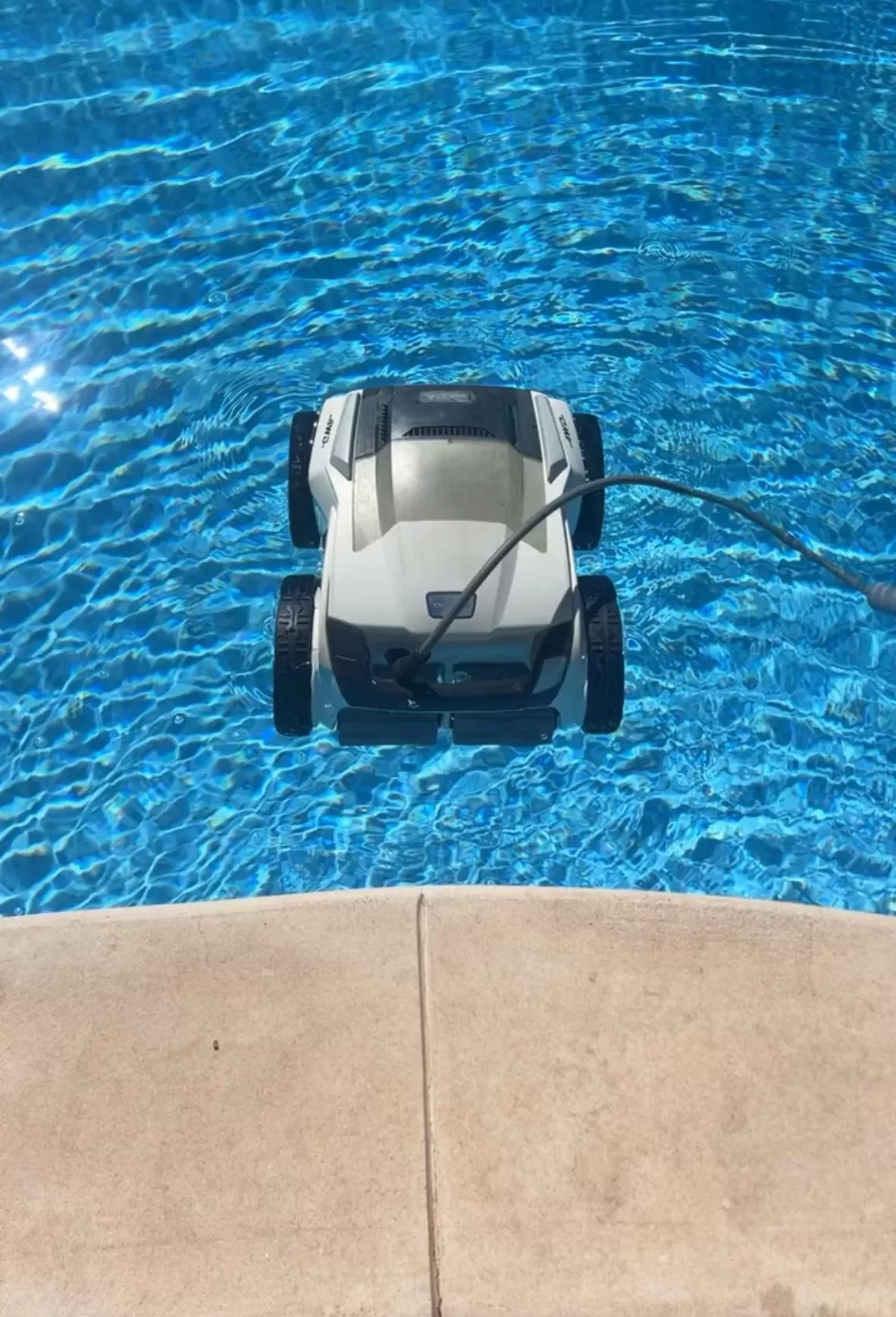
Robotic cleaners
Robots have their own debris collection and do not use the pool’s suction line. Look at the manufacturer’s stated pool-size limit, floor versus wall coverage, filter options, lifting weight and replacement-part availability. A machine that handles leaves well may need a different filter for fine particles.
Check electrical access before buying a corded robot. It needs the specified GFCI-protected outlet and safe power-supply placement. Do not add an extension cord to make the layout work. For example, the Polaris PHENOM, ALPHA and VRX manual prohibits extension cords. Battery-powered models have separate charging instructions that also need a suitable dry location.
Suction-side cleaners
These use the pool pump through a compatible skimmer or suction port. They can suit an existing suction-cleaner setup, but their performance depends on available flow, hose arrangement and the condition of baskets and the filter. Use the cleaner’s specified flow test rather than selecting a pump speed by guesswork.
As an example, Hayward The PoolCleaner 2- and 4-wheel suction models connect to the existing circulation system. Model size, hose reach and pool layout still matter; the brand name alone does not establish compatibility.
Pressure-side cleaners
A pressure-side unit collects debris using return-water pressure. Booster requirements are model-specific: the Polaris 280 requires a booster pump, while the Polaris 360 is designed without one and must not be connected to a booster. Include any needed equipment or plumbing work in the total cost.
Compare the full ownership cost
- Confirm which filters, bags, hoses, caddy or charging equipment are included.
- Ask about replacement brushes, tires, tracks and filter elements for that exact model.
- Compare the complete installed price and written warranty terms, including wear-item exclusions and where service is available.
- Consider cleaning and lifting effort as well as purchase price.
Energy savings depend on the cleaner, pump settings and operating schedule. A robot does not remove the need for circulation or water treatment, so do not reduce those simply because the floor looks clean.
Keep a manual cleanup option
Remove large branches and heavy leaf piles before running an automatic cleaner. Use a surface-appropriate brush for missed areas. Algae and persistent cloudiness call for water testing and a filtration check, not repeated cleaner cycles alone. Turn equipment off before clearing jams or handling suction connections, and follow the manual’s swimmer-exclusion rules.
Getting help in San Angelo
For help with choosing or troubleshooting an inground pool cleaner, explore San Angelo pool cleaning services and contact Concho Valley Pool to ask about service options and availability. Share your pool dimensions, surface, equipment photos and typical debris to ask which options can be assessed for your setup.
Tags: pool cleaning service near me, pool service san angelo tx, pool vacuuming, robotic pool cleaner, san angelo pool cleaning