
Plan how an inground robot will work in your pool
An inground robotic pool cleaner can collect settled debris using its own onboard filtration. Whether it reaches the areas you care about depends on the model, pool geometry, selected mode and setup.
Before buying or running one in San Angelo, walk around the pool and plan the launch point, power or charging location, retrieval and storage. These practical details matter as much as the advertised cycle time.
Map the pool’s difficult areas
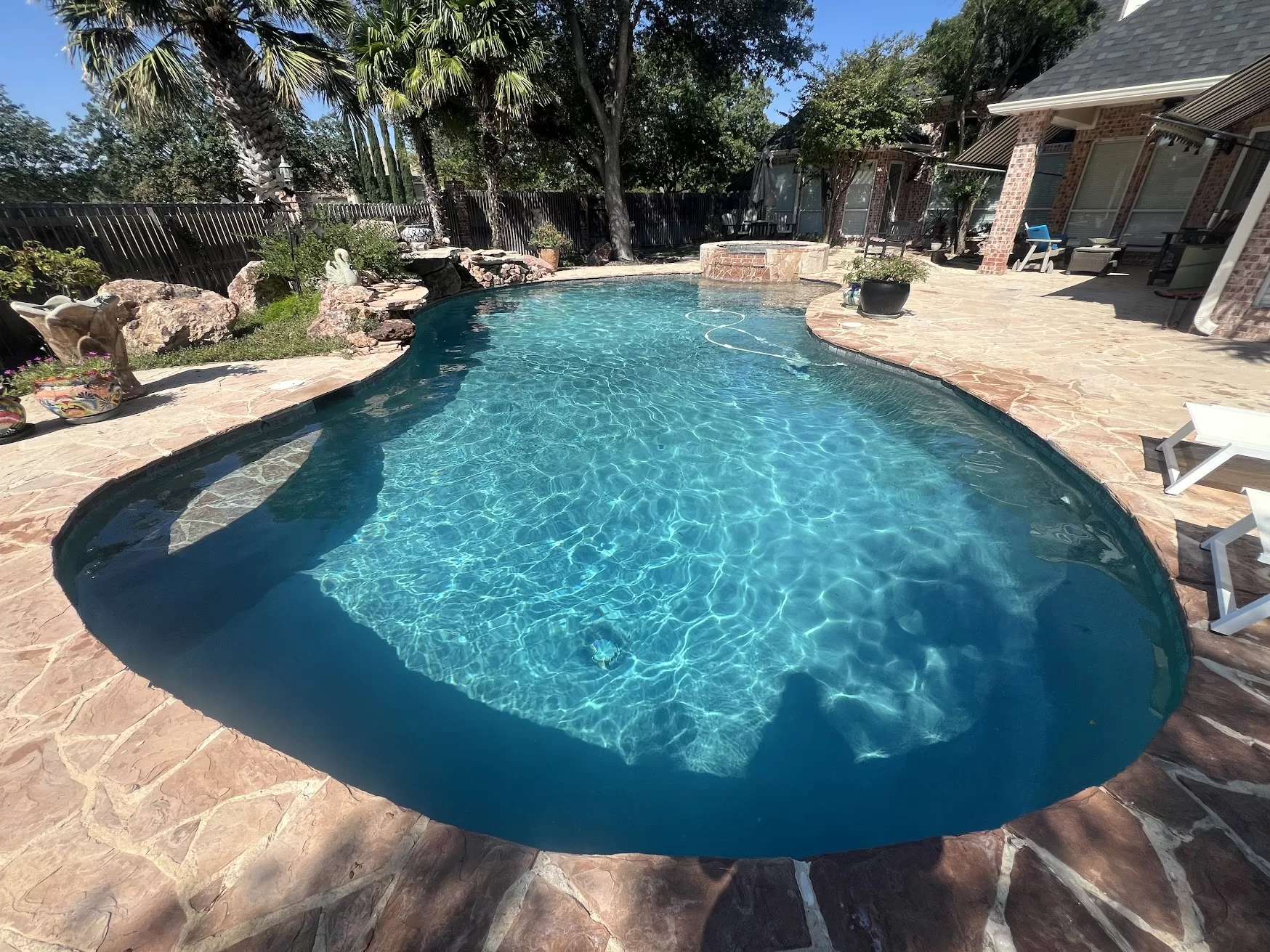
Record pool length, width and depth, then identify sharp transitions, recessed corners, benches, steps and tanning ledges. Check minimum operating depth and approved surfaces in the exact manual. A cleaner rated for an inground pool may still leave some of those areas for manual brushing.
Check floor, wall and waterline coverage separately. Wall scrubbing is not a promise to remove existing scale or stains, and a cleaner reaching a step on one pass does not establish reliable stair coverage.
Plan safe power and retrieval
For a corded model, confirm that the permitted power-supply position and floating cable reach work together. Keep the unit the required distance from the water, out of standing water and away from foot traffic. Polaris requires a direct GFCI-outlet connection without an extension cord; follow the cleaner’s own installation instructions.
For a cordless model, plan where it will be charged and how it will be retrieved if it stops away from the edge. Follow its charger, drying and storage instructions. Check that the person doing the work can comfortably retrieve and carry the drained cleaner.
Remove the cleaner before swimming and disconnect power before inspection or maintenance. Stop use if a cable or connector is damaged or electrical protection trips. Do not lift a corded robot out of the water by its cable.
Watch the first cycles
- Remove large branches, toys and bulky debris manually before introducing the cleaner.
- Check that water conditions are within the cleaner manual’s operating limits and that the filter is clean and correctly installed.
- Use the recommended entry point and initial mode, allowing trapped air to escape as instructed.
- Observe coverage from outside the pool. Note repeated obstacles and areas missed over completed cycles.
- Remove and clean the collection filter according to the manual, then decide whether a different supported mode or filter is needed.
If one area remains dirty, first check setup, filter condition and supported coverage. Do not assume a stronger motor or a longer cycle will solve a geometry problem.
Build an after-use routine
Empty collected debris before it dries onto the filter, rinse as directed and inspect accessible brushes and tracks for loose material. Replace wear parts according to their condition and the manufacturer’s instructions. Store the cleaner and its electrical equipment as the manual specifies.
Keep the rest of pool care going
The robot’s filter does not replace the pool’s circulation system or water treatment. Continue routine testing; CDC identifies disinfectant and pH control as essential for home-pool care. Persistent green or cloudy water needs assessment beyond additional robot cycles.
For help with the tasks your robot leaves behind, explore San Angelo pool cleaning services and contact Concho Valley Pool with photos of the problem areas and your cleaner’s model.
Tags: inground pool robot, polaris vrx, pool cleaning service near me, pool service san angelo tx, robotic pool cleaners, san angelo pool cleaning