
Start with the cleaning system your pool needs
If you are looking for the best robotic pool cleaner, first decide whether a robot is the right replacement for your current setup. Existing connections, the debris you collect and the work you are willing to do all affect the choice.
This San Angelo buying guide compares cleaner types and the questions to resolve before selecting a model. Start with the connections and cleaning tasks that matter for your pool.
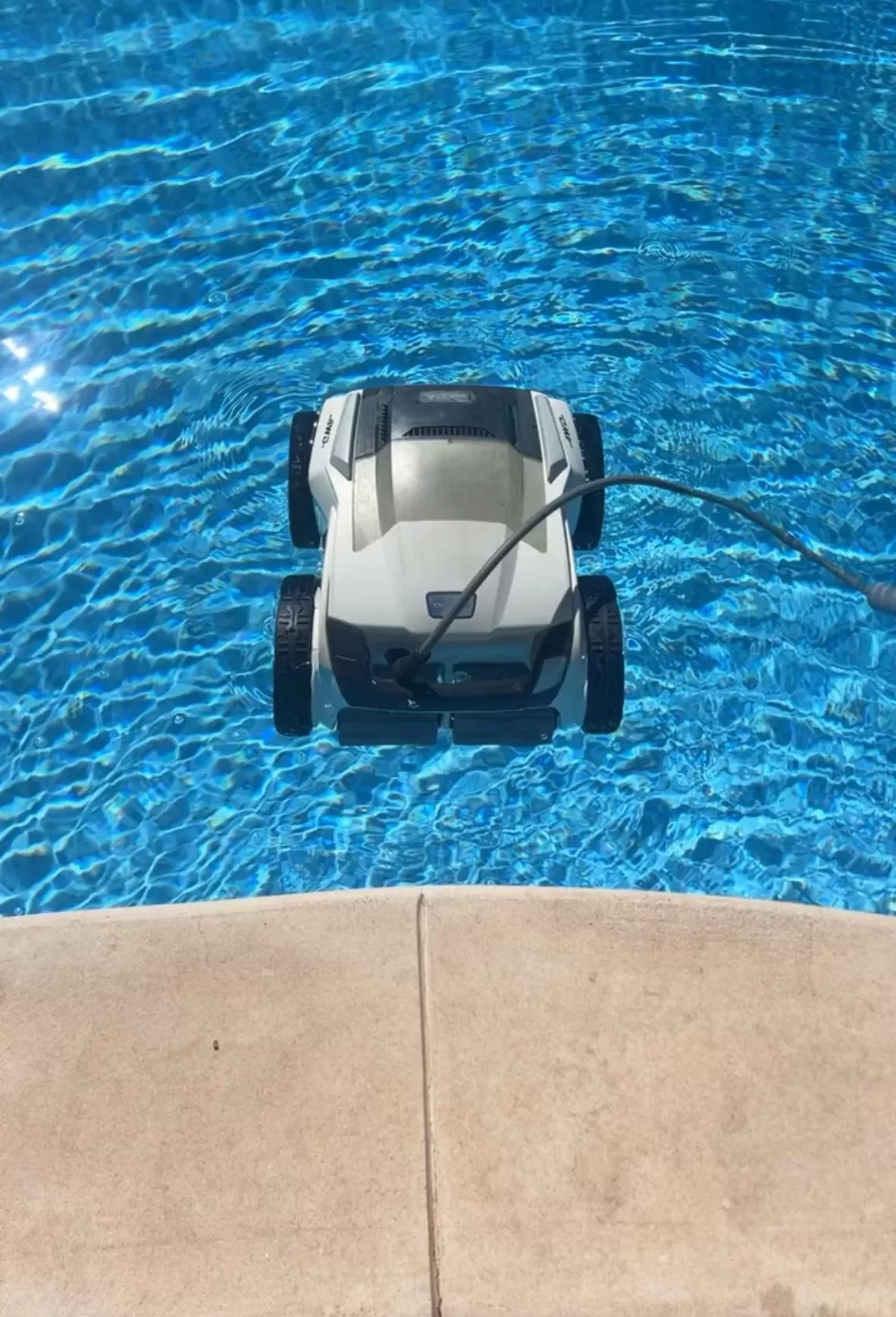
Understand the three common automatic cleaner types
- Robotic: Uses its own motor and collection filter. Corded models use an electrical power supply; cordless models need charging. You retrieve the cleaner and clean its filter as instructed.
- Suction-side: Uses the pool pump’s suction and sends collected material toward the pool’s filtration system. The connection, required flow and hose setup must suit the pool equipment.
- Pressure-side: Uses water pressure from the circulation system and collects debris in its own receptacle. Requirements vary; some models need a dedicated booster pump.
Polaris’ cleaner-type overview explains these different operating arrangements. A robot does not connect to the suction hose simply because it replaces a suction cleaner.
Consider the system you already have
If an existing cleaner works well and has one worn part, get a diagnosis and an itemized repair estimate before replacing the whole system. Ask about compatibility and part availability rather than assuming a new model will fit the same connection.
If you change cleaner types, ask a qualified pool professional what should happen to the old hose, dedicated line and any booster-pump schedule. Do not leave an unnecessary pump running or alter plumbing without understanding the system. Keep the pool’s required circulation and treatment in operation.
Choose around the debris and effort
Note whether your main problem is bulky leaves, settled fine dirt or areas that require manual brushing. Compare the exact model’s debris path, compatible filters, inlet and collection capacity. A product labeled for fine debris will still require filter maintenance, and large branches should be removed manually.
Consider the full routine: connecting hoses, lifting the unit, emptying a bag or basket, cleaning filters and putting equipment away. Ask to see how the cleaner is handled rather than choosing from dry weight alone.
If a robot fits, narrow the shortlist
- Match manufacturer-approved pool dimensions and surface compatibility.
- Choose the coverage needed: floor, walls and waterline are separate features. Verify expectations for steps and ledges.
- Plan a compliant power-supply position or charging location and safe retrieval.
- Compare included filtration with the debris you actually collect.
- Check purchase total, return terms, warranty and the repair route for the exact model.
For corded robots, a nearby-looking outlet may still be unsuitable. Follow the manufacturer’s clearance and GFCI requirements; Polaris prohibits extension cords. Have electrical questions assessed by a qualified electrician.
Budget for the care that remains
A cleaner removes debris within its capabilities. It does not eliminate surface skimming, inspection, filter care or water testing. Keep checking disinfectant and pH under CDC’s home-pool guidance; a visually clean floor is not a water-safety test.
To discuss how equipment and ongoing care could work together, review San Angelo pool cleaning services and contact Concho Valley Pool with your current cleaner type, pool details and the job you want a replacement to handle.
Tags: polaris vrx iq, pool robots san angelo, pool vacuuming, robotic pool cleaner, robotic pool cleaner review