
Choosing a pool bottom cleaner in San Angelo
Leaves on the floor, scattered grit and a dusting that returns after vacuuming are different cleaning problems. Before buying a pool bottom cleaner, note what is collecting, where it settles and how quickly it returns. A cleaner removes debris; clear-looking water still needs proper testing and treatment. This guide focuses on matching floor-cleaning equipment to the work your pool actually needs.
Start with the debris and pool surface
Photograph the affected areas before cleaning. Record whether material collects in corners, around steps or near return fittings, and whether it appears after windy weather or after the pump starts. Check the pool finish and its care instructions before choosing a vacuum head or brush. An abrasive tool that suits one surface may damage another.
Compare the practical options
- Manual vacuum: Gives you direct control for targeted floor cleaning. Confirm the head, hose and connection suit your pool; a pump-connected setup relies on adequate flow.
- Suction-side cleaner: Uses the pool pump and sends debris to the pool filter. Consider the added filter workload as well as the cleaner’s coverage.
- Pressure-side cleaner: Collects debris in its own bag or receptacle. Check whether the exact model needs a booster pump and whether your plumbing is compatible.
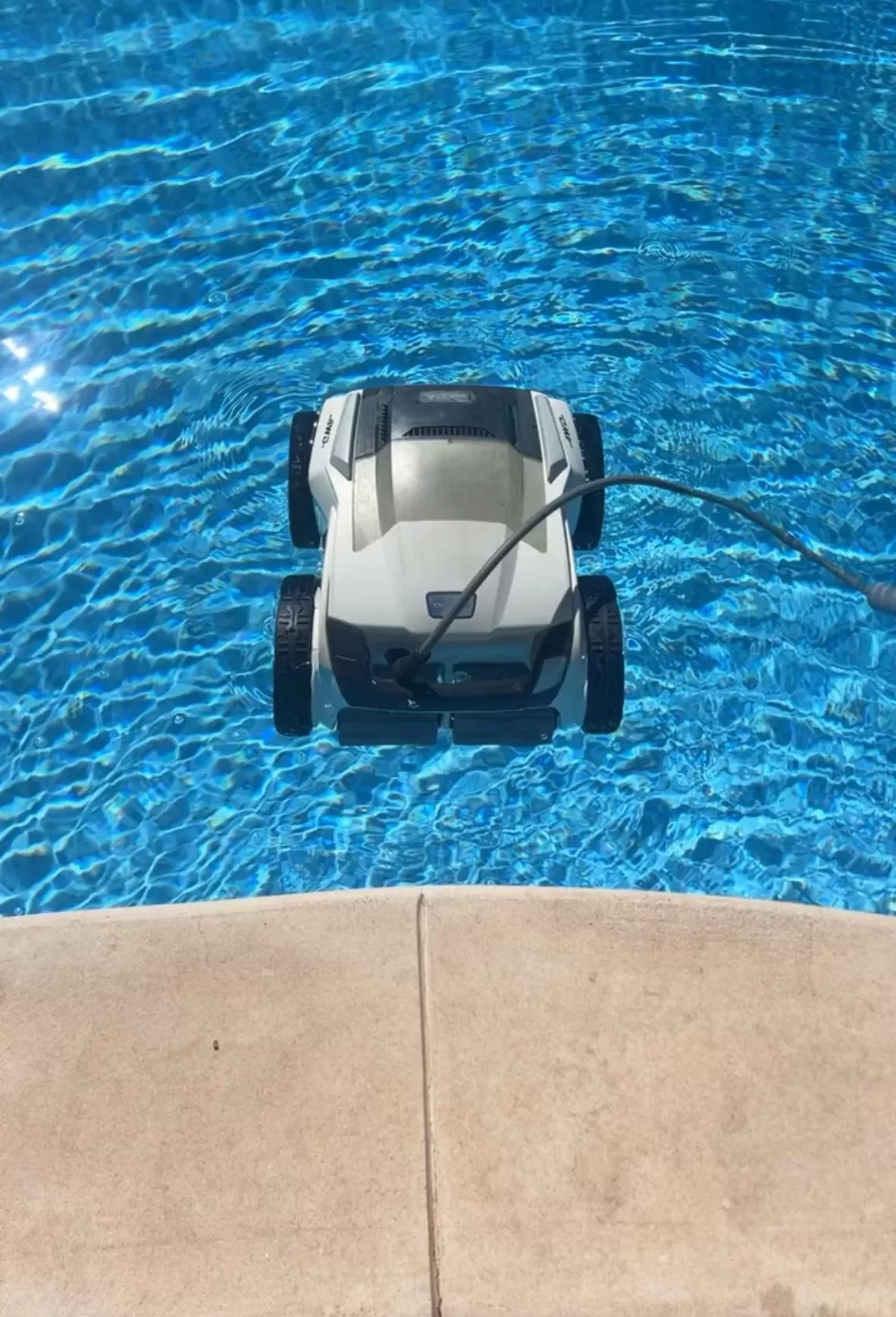
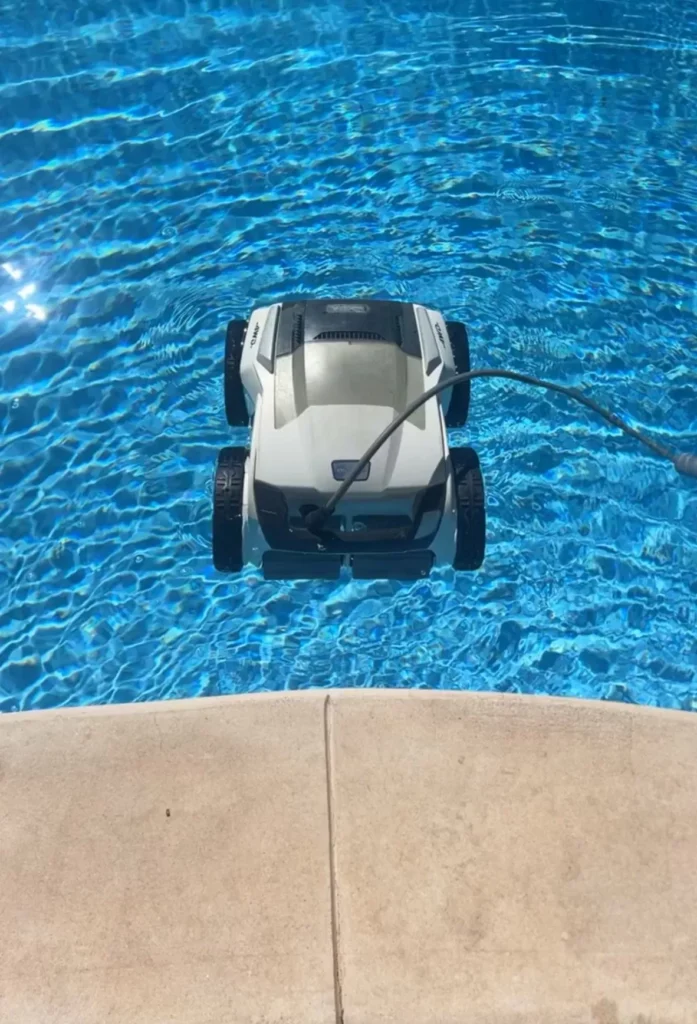
- Robot: Collects debris in an onboard filter independently of the main pool pump. Floor coverage, wall climbing, waterline cleaning and filter options vary by model.
Polaris’s cleaner overview explains these automatic-cleaner categories. No category is universally best or cheapest once installation, wear parts and your time are included.
For fine debris, inspect what gets captured
Ask whether the supplied bag or filter is intended for fine particles, and whether another filter is required for the debris you have. Check how easily you can remove and rinse it. A large collection basket is useful only if its filter captures the material you are trying to remove.
If dust reappears, inspect the collection filter for damage or poor seating and note whether debris seems to return through a pool fitting. Repeated cloudiness or green growth calls for water testing and a circulation check. Vacuuming alone cannot establish that the water is ready for swimming, and a stronger cleaner will not solve every filtration problem.
Keep setup and maintenance safe
Follow the cleaner’s manual for setup and retrieval, and keep swimmers out during use. Switch off and isolate the appropriate power source before removing blockages. If vacuuming causes the pump to lose prime, stop and investigate instead of letting it run dry. Leave electrical faults and uncertain plumbing connections to a qualified professional.
Never loosen a pressurized filter lid to improve flow. Follow your filter manufacturer’s shutdown, pressure-release and restart procedure; Pentair’s filter safety guidance explains why trapped pressure matters.
Get help with recurring floor debris
For help choosing equipment or investigating recurring debris, review Concho Valley Pool’s San Angelo pool cleaning services and contact the company with your pool surface, equipment models and photos. Ask what inspection is needed before buying a replacement cleaner.
Tags: chlorine prices san angelo, pool bottom cleaner, pool maintenance, pool vacuuming, robotic pool cleaner, san angelo pool cleaning