
A saltwater pool still uses chlorine: the generator produces it from dissolved salt. That convenience does not eliminate testing, filtration or cleaning. Low chlorine can involve settings, runtime, flow, water conditions or cell condition, so adding more salt is not a universal fix.
Use the instructions for your cell
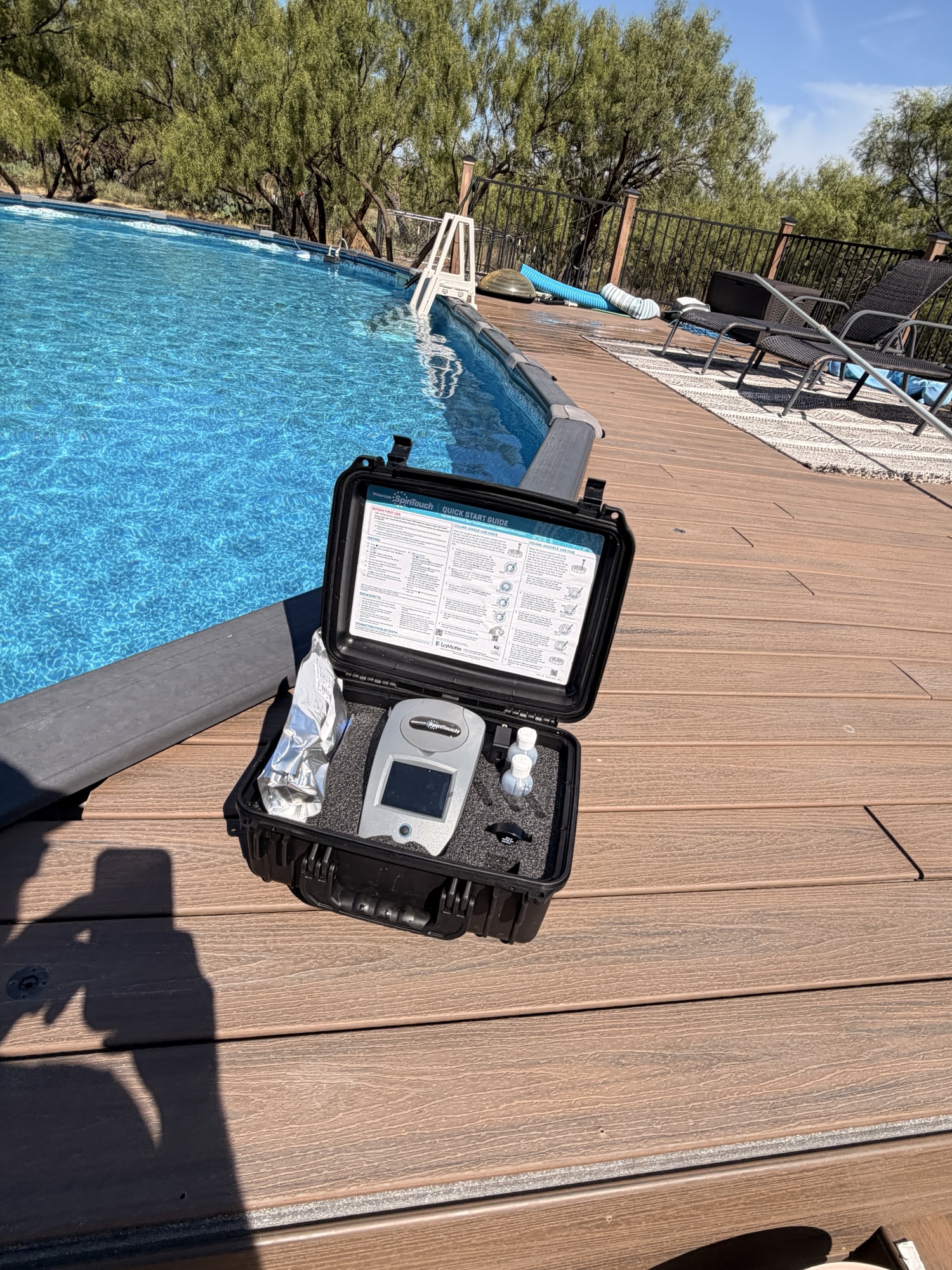
Record the cell and controller model, displayed warnings, output setting and recent water-test results. Compare salt level with the range specified for that system and confirm questionable readings before adding salt. Pentair’s IntelliChlor guidance illustrates why several different conditions can cause low chlorine; another brand may have different limits and diagnostics.
Useful details for a service visit
- Recent chlorine, pH, salt and stabilizer test results.
- The controller message and when it appears.
- Pump runtime and any loss of flow.
- Whether visible deposits or changing readings prompted the concern.
Do Not Brush or Scrape Cell Coatings
Do not insert tools or brushes between cell plates or improvise an acid-cleaning mixture. Follow the exact manufacturer’s inspection and cleaning procedure, with equipment isolated as directed. Repeated unnecessary cleaning can be harmful. If you cannot confirm the procedure or the cell is damaged, arrange service.
Continue testing sanitizer and pH rather than relying only on the generator’s status light. Confirm a treatment plan before increasing output or adding salt and chemicals.
Local Service and Parts Questions
For an assessment, see Concho Valley Pool’s San Angelo service options or contact the business at 469-585-4093. Send the exact equipment model, symptoms and useful photos. Ask about current parts availability, service scope and pricing before booking.
Tags: pool chemicals san angelo, pool cleaning service near me, pool service san angelo tx, salt chlorine generator, saltwater pool maintenance, san angelo pool cleaning