
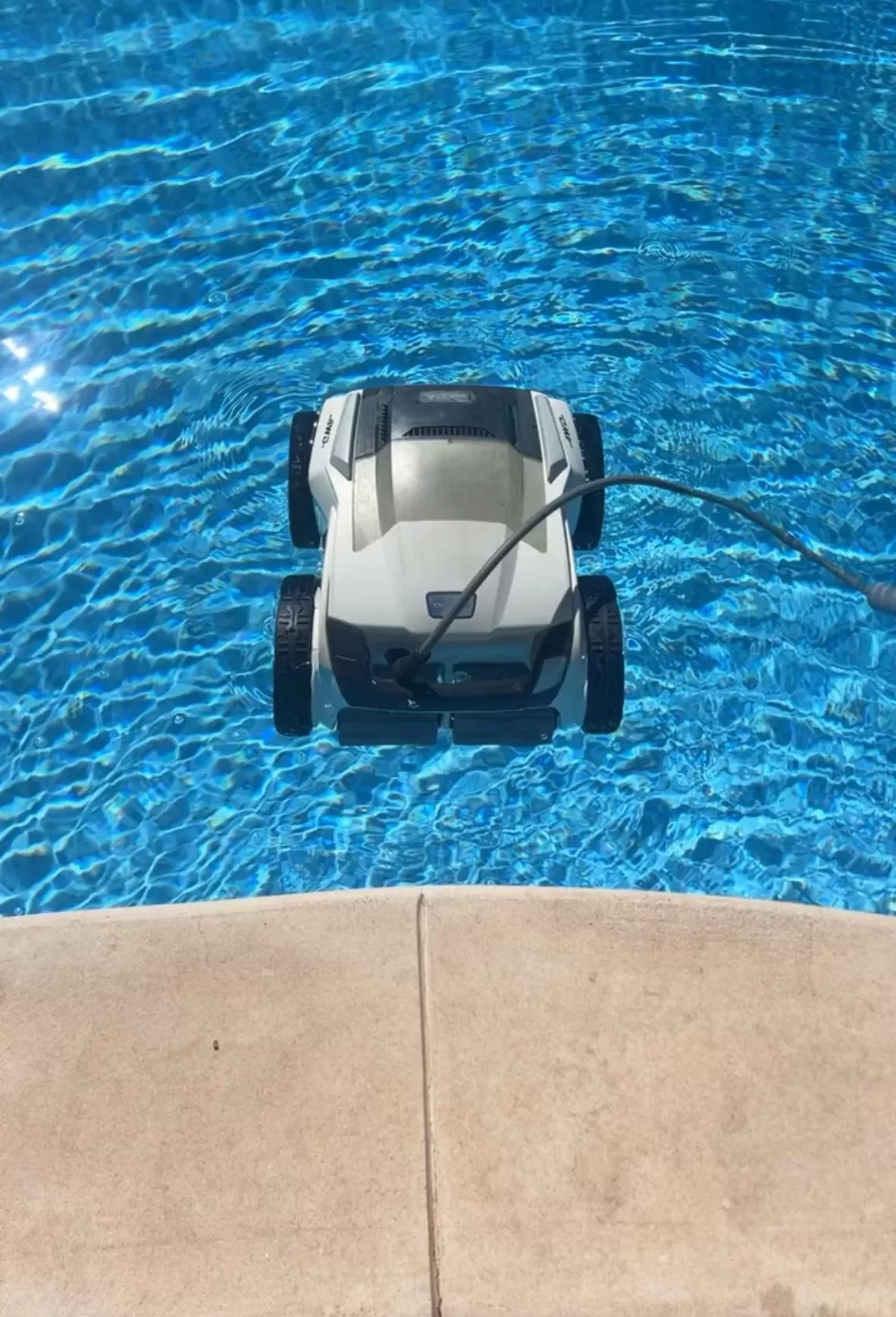
When a pool floor cleaner misses debris or stops moving, identify whether it is robotic, suction-side or pressure-side before troubleshooting. They do not share one power source, filter arrangement or diagnostic procedure.
Start with accessible routine checks
Switch the equipment off and disconnect it as its manual requires before inspection. Empty and rinse the robot’s filter or pressure cleaner’s bag when appropriate. Check accessible brushes, tracks or hose sections for debris and damage. A suction cleaner depends on the pool’s circulation system; a robot’s onboard filter is a separate collection system.
Describe the failure precisely
- Does the cleaner move but miss debris, or remain stationary?
- Does the symptom occur immediately or later in the cycle?
- Are there error indicators, damaged hoses or visible blockages?
- Did performance change after a filter, brush or equipment setting changed?
Keep Routine Checks Safe
Use the exact manual for power, flow, retrieval and maintenance. Do not lift a robot by its cord or open sealed electrical housings. Stop using damaged wiring or equipment that repeatedly trips protection. Keep swimmers out while the cleaner operates.
Pressure-cleaner booster requirements vary by model; the Polaris 360 is a no-booster example. Cleaner type alone is not enough to decide compatibility. All cleaners still need a pool with appropriate testing, sanitizer and circulation.
Local Service and Parts Questions
For an assessment, see Concho Valley Pool’s San Angelo service options or contact the business at 469-585-4093. Send the exact equipment model, symptoms and useful photos. Ask about current parts availability, service scope and pricing before booking.
Tags: pool cleaning service near me, pool floor cleaner, pool service san angelo tx, pool vacuuming, san angelo pool cleaning