
Choosing an above-ground pool cleaner in San Angelo
Above-ground pools need a cleaner that suits their liner, floor shape, fittings, and pump. A model built for a large in-ground pool may be the wrong match even if it has impressive features. Before buying, write down your pool dimensions, depth, construction type, and pump/filter model numbers.
Start with the pool itself
Inspect the liner for loose areas or damage and note wrinkles, the floor-to-wall cove, and any ladder or stair arrangement. Confirm that both the pool and cleaner manufacturers permit the proposed equipment. Do not assume “above-ground compatible” means every soft-sided, steel-wall, or framed pool.
Compare four workable approaches
- Manual vacuum: Useful for smaller jobs and precise cleanup around ladders or steps. Choose a head suitable for the liner, and confirm the pole, hose, and connection fit. Some small-pool vacuums use their own battery or a garden-hose collection bag instead of pool suction.
- Suction-side automatic cleaner: Uses an approved suction connection and the pool pump. Check the cleaner’s flow requirement against your actual system; pump horsepower alone does not establish compatibility.
- Pressure-side cleaner: Connects to return water. The Polaris 65 is one example designed for above-ground pools up to five feet deep without a booster pump. Return fitting and hose setup still need checking.
- Robotic cleaner: Collects debris independently in its own filter. The Dolphin E10, for example, specifies floor coverage for above-ground pools. Do not assume every robot climbs walls or is suitable for a flexible pool wall.
Check the practical details before checkout
Measure the route from the approved power-unit location to the farthest cleaning point for a corded robot. For a battery model, consider charging, retrieval, and dry storage. Compare included filter types with your debris: a filter that holds many leaves may not capture the fine dust that bothers you most.
Consider lifting as well as cleaning. A robot must be drained and retrieved safely, potentially over a tall pool wall. Do not use a pool rail as a lifting anchor or pull equipment out by its electrical cable. Ask whether the supplied retrieval method works with your deck and access.
Resolve flow problems before adding equipment
If the current vacuum is weak, check the water level, baskets, hose condition, and filter maintenance history. Follow the filter manufacturer’s cleaning threshold rather than a universal pressure number. Cartridge filters are cleaned according to their instructions; they are not automatically backwashed like a sand filter.
Turn the pump off before moving filter-valve settings or opening equipment, and release pressure as the manual requires. Never open a pressurized filter. A pump that loses prime, a leaking fitting, or an unexplained pressure change needs diagnosis instead of a larger cleaner.
Leave room for routine care
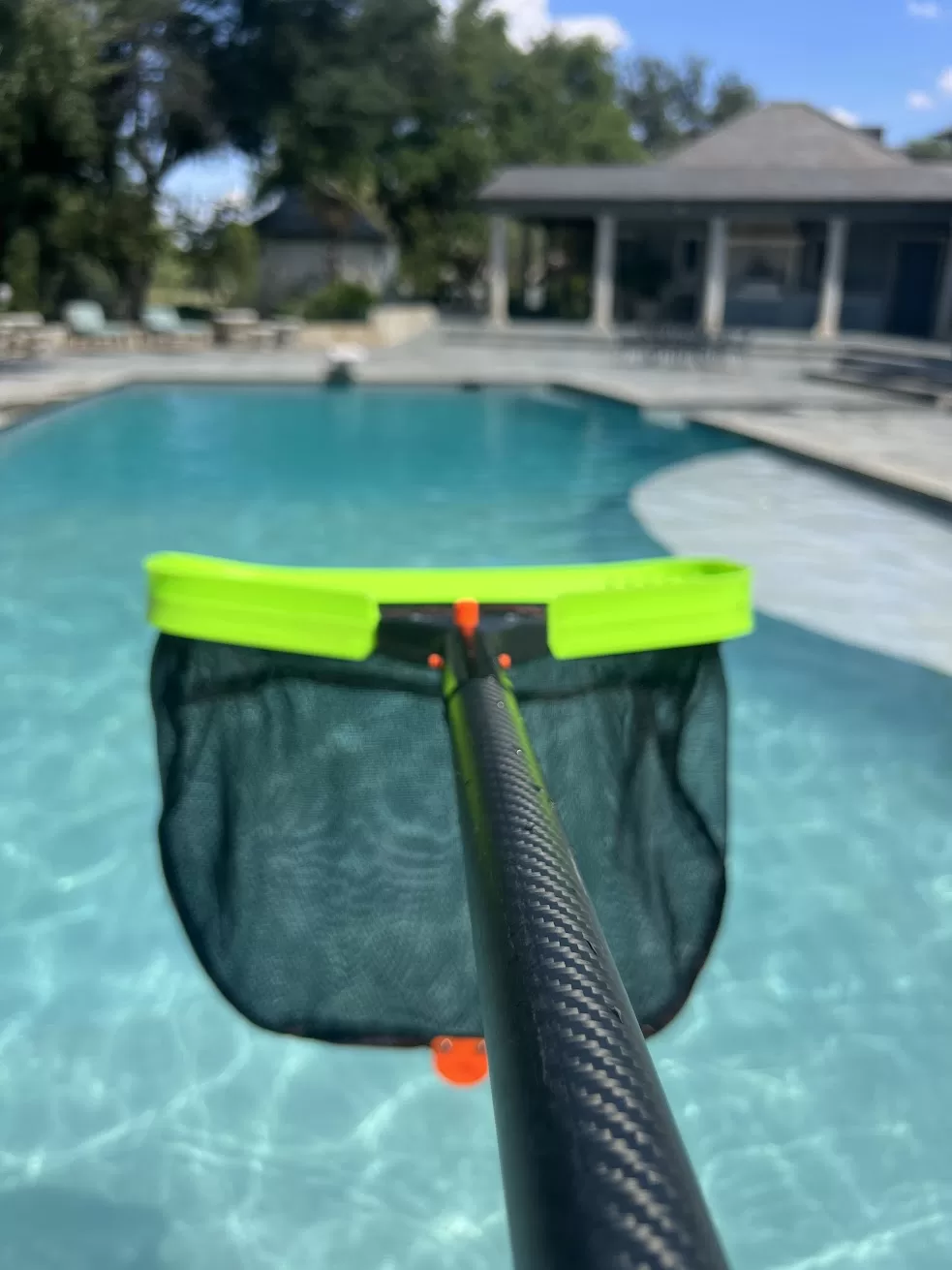
Keep a liner-compatible brush and net for the areas an automatic cleaner misses. Continue normal circulation, testing, and sanitation. Persistent algae or cloudy water needs a water-quality assessment; vacuuming alone does not resolve the cause. Remove cleaning equipment before swimming and follow each model’s electrical and chemical-exposure precautions.
Pool care in San Angelo
Need help deciding which cleaning approach fits your above-ground pool? Explore San Angelo pool cleaning services or contact Concho Valley Pool at 469-585-4093 to discuss your pool and ask about service options.
Tags: above ground pool cleaner, pool cleaning service near me, pool service san angelo tx, pool vacuuming, robotic pool cleaner, san angelo pool cleaning